
A dog muzzle guide for every owner – because every dog benefits from being comfortable wearing a muzzle. Regardless of size, breed, or temperament, muzzle training is about preparation, not correction.
Think of muzzle training like fitting a seatbelt. You don’t wear a seatbelt because you expect to crash – you wear it because being prepared keeps everyone safer if something unexpected happens. The same principle applies to muzzles. A dog who’s already comfortable wearing one can be helped more easily in emergencies, handled more safely at the vet, and managed more effectively if circumstances change.
This comprehensive guide covers everything you need to know: why muzzles matter, when to use them, how to choose the right one, and how to train your dog to accept wearing one happily. Whether you’re considering a muzzle for the first time or looking to improve your current approach, you’ll find practical, expert-backed guidance here.
Why Do Dogs Need Muzzles?
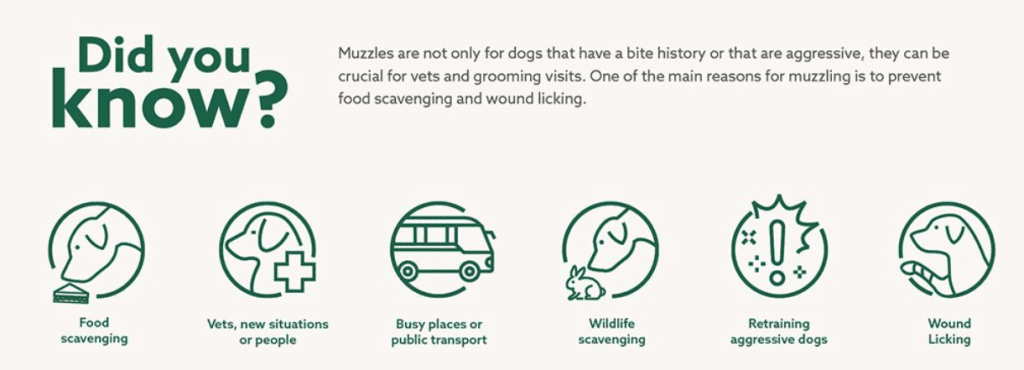
Muzzles are often misunderstood as tools only for aggressive dogs. In reality, they’re safety and management tools that benefit dogs in many different situations – and every dog should receive muzzle training before the need arises.
Emergencies and Unexpected Situations
Even the gentlest dog may bite when frightened or in pain. If your dog is injured in an accident, they may need emergency veterinary treatment while distressed. A dog already comfortable with a muzzle can be safely handled in that moment; a dog who has never worn one faces an unfamiliar experience on top of an already frightening situation.
Pain changes behaviour. A normally placid dog might bite when their broken leg is examined, when stitches are checked, or when they’re lifted into a car for an emergency trip to the vet. Being prepared for these scenarios isn’t pessimistic – it’s responsible.
Veterinary and Grooming Visits
Vets and groomers sometimes need to do things that are uncomfortable or unfamiliar. Examinations, injections, nail trimming, or ear cleaning can all trigger defensive behaviour in otherwise calm dogs. A muzzle protects everyone involved and often helps professionals work more confidently, which can make the experience less stressful for your dog too.
Many veterinary practices actively welcome owners who bring muzzle-trained dogs. It demonstrates responsible ownership and allows the team to focus on care rather than safety management.
Preventing Scavenging
Some dogs treat every walk like a treasure hunt, eating anything they find – from discarded food to fox droppings to potentially dangerous items like bones, rubbish, or toxic substances. A muzzle can prevent your dog from eating everything, especially those with an anti-scavenge guard, protecting your dog from illness, poisoning, or intestinal blockages that might require expensive emergency surgery.
Safety During Behaviour Modification
If you’re working on behaviour issues with a dog who has shown inclination to bite, a muzzle stops them from biting and provides a safety net during training. It allows you to work on the underlying behaviour without risk of injury, and can help anxious owners relax – which in turn helps their dogs stay calmer.
A muzzle in this context isn’t about labelling your dog as dangerous. It’s a practical tool that enables progress while keeping everyone safe.
Breed-Specific Legislation
Certain restricted breeds are required by law to be muzzled in public. XL Bullies, for example, must wear a muzzle whenever they’re outside the home. These dogs haven’t necessarily done anything wrong – it’s simply a legal requirement. Training them to accept a muzzle comfortably is essential for their quality of life and their owners’ ability to exercise them properly.
Travel Requirements
Some forms of transport, particularly in other countries, require dogs to be muzzled. If you travel with your dog or might need to in an emergency, having them already comfortable with a muzzle removes one source of stress from an already complex situation.
Creating Space and Reducing Pressure
For nervous dogs who find encounters with strangers or other dogs overwhelming, a muzzle can paradoxically reduce stress. People tend to give muzzled dogs more space – they don’t let their children run up to pet them, they keep their own dogs at a distance. For a dog who needs that space to feel safe, a muzzle can be a genuine relief.
When Should a Dog Wear a Muzzle?
The situations where muzzles help are more varied than most people realise.
Situations Where Muzzles Are Commonly Used
Veterinary visits: Particularly for dogs who become anxious or defensive during examinations, injections, or procedures. Even routine visits can be stressful, and a muzzle provides security for all involved.
Grooming appointments: Nail trimming, ear cleaning, and bathing can all trigger defensive responses in some dogs. Professional groomers often appreciate working with muzzle-trained dogs.
Walks with scavenging dogs: For dogs who eat anything they find, including faeces (coprophagia), harmful objects, or toxic substances. The right muzzle can eliminate this risk entirely.
Behaviour training sessions: When working with dogs who have shown biting behaviour, as a safety measure during rehabilitation. This allows training to progress without risk.
Introducing new animals: When bringing a new pet into the home, particularly if there’s any uncertainty about how dogs will react to each other.
Post-surgery recovery: As an alternative to recovery cones for dogs who need to be prevented from licking wounds. Some dogs find muzzles less distressing than cones.
Crowded or unpredictable environments: Public transport, busy events, or anywhere your dog might feel overwhelmed by people, noise, or activity.
Types of Dog Muzzles Explained
Not all muzzles are equal. The type you choose significantly affects your dog’s comfort, safety, and welfare.
Basket Muzzles: The Safe Choice
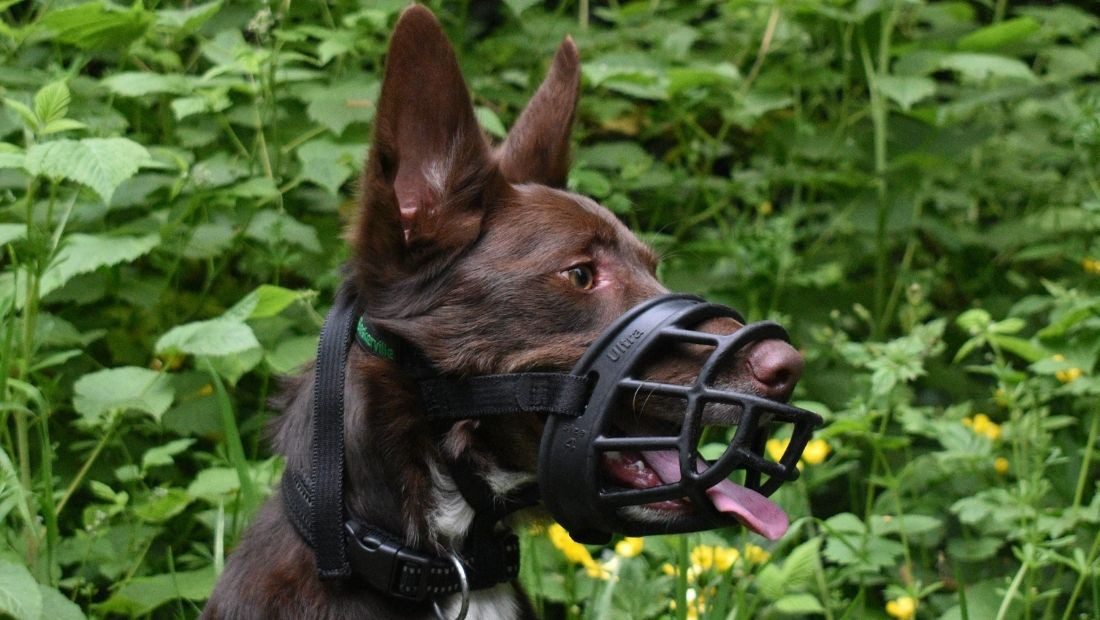
Choosing a basket muzzle has many benefits beyond momentary use. Their open structure allows dogs to pant freely, drink water, and take treats – essential for both comfort and safety.
Quality basket muzzles are made from durable materials like TPR (thermoplastic rubber), which is strong enough to provide genuine bite protection while remaining lightweight and comfortable. Many can be reshaped with hot water to achieve a custom fit for your individual dog’s face shape.
The gaps in a basket muzzle aren’t a weakness – they’re a crucial design feature that allows airflow while still preventing biting. A well-fitted basket muzzle keeps your dog comfortable during extended wear while providing effective protection.
Why Soft Muzzles Are Not Safe
Fabric muzzles, mesh muzzles, and other soft designs might look gentler, but they pose serious welfare risks that every owner should understand.
Soft muzzles work by holding the mouth closed. To prevent biting effectively, they must fit snugly – which restricts how wide your dog can open their mouth. This compromises their ability to pant, the only way dogs can regulate body temperature. In warm weather, during exercise, or in stressful situations, this can lead to dangerous overheating.
Dogs wearing soft muzzles cannot drink water, cannot take treats (making positive training impossible), and may struggle to vomit safely if they need to. The snug fit also causes skin irritation during extended wear.
Many soft muzzles also fail at their primary purpose. They can be bitten through, they squash flat under pressure, and they often don’t actually prevent determined biting or scavenging.
Soft muzzles have extremely limited appropriate uses – essentially only for momentary veterinary procedures. For any other situation, they are not safe. Therefore, to keep your dog safe and effectively handle the biting, you need to pick a humane muzzle that does not restrict panting or drinking.
Cheap Silicone Copies
Inexpensive silicone muzzles may look similar to quality basket designs but often lack the strength to do the job. These muzzles may squash flat when a dog attempts to bite, offering no real protection. When choosing a muzzle, quality matters – there’s usually a good reason why one muzzle costs significantly less than another.
How to Choose the Right Dog Muzzle
Choosing the best dog muzzle involves matching the design to your dog’s face shape, measuring accurately, and selecting appropriate features for your intended use.
Consider Your Dog’s Face Shape
Longer or narrower noses (Collies, Greyhounds, Spaniels, Labradors, and similar breeds): Standard muzzle shapes work well, providing a secure fit that follows the natural contour of the face.
Broader or shorter faces (Bulldogs, Staffies, Boxers, Pugs, and similar breeds): Require specifically designed wide-fit muzzles that accommodate their face structure and provide adequate panting room. This is particularly important for brachycephalic breeds who already have compromised airways.
How to Measure Your Dog
Accurate measurement is essential for comfort and effectiveness.
Length (most important): Measure from the tip of your dog’s nose to the base of the nose, just below the eyes. The tip of your dog’s nose should not touch the end of the muzzle when fitted – there must be space.
Circumference: Measure around the widest part of the muzzle, usually just below the eyes. Ideally, measure with your dog’s mouth open to ensure adequate panting room.
If your dog falls between sizes, always size up. A slightly roomier muzzle is more comfortable and safer than one that’s too tight.
Consider Your Intended Use
For scavenging prevention: Choose a muzzle with an anti-scavenge guard – a removable insert that prevents dogs from picking up items through the basket openings.
For long walks: Prioritise lightweight construction and padding to prevent fatigue and pressure points during extended wear.
For bite prevention: Ensure the muzzle is made from strong, durable material that won’t squash or deform under pressure.
The Baskerville Range
The Baskerville range offers four muzzle designs, each suited to different needs:
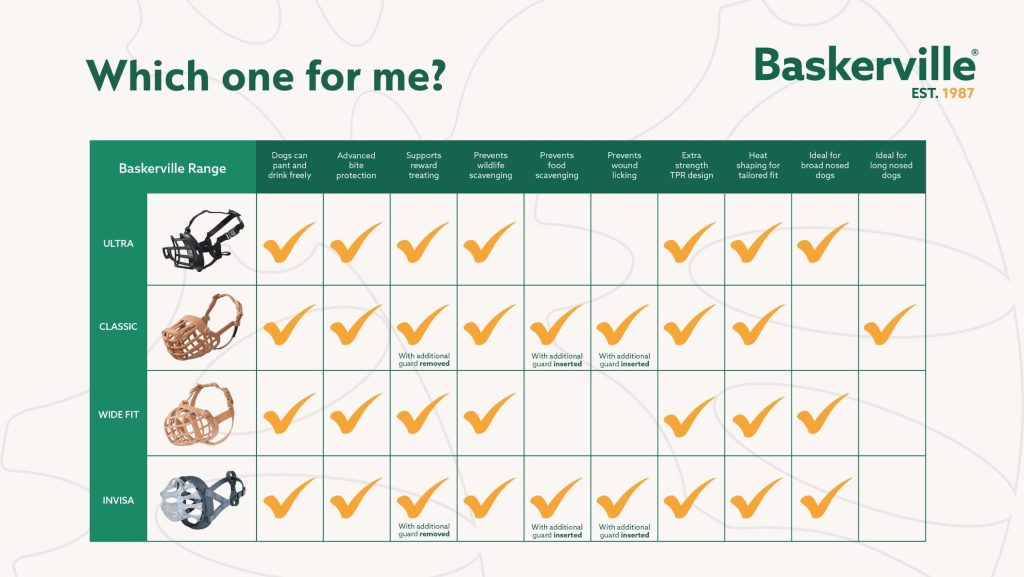
Baskerville Ultra: The most widely used design, featuring durable TPR construction, adjustable straps, and heat-reshaping capability for a custom fit. Suitable for dogs with standard face shapes. Ideal for active dogs and regular use.
Baskerville Classic: Features a padded noseband and removable anti-scavenge guard. Particularly suited to longer-nosed breeds and dogs who need scavenging prevention. The established choice for coprophagia and eating prevention.
Baskerville Wide Fit: Designed specifically for broader-faced breeds who struggle with standard muzzle shapes. Features a padded noseband and extra panting room – essential for brachycephalic breeds like Bulldogs, Staffies, Boxers, and Pugs.
Baskerville INVISA: The lightest muzzle in the range (50g-220g depending on size) with 360-degree padding and a transparent design that lets people see your dog’s face. The V-shaped strap system provides stability without a head strap. Includes a removable anti-scavenge guard. Ideal for long walks, maximum comfort, and owners concerned about muzzle stigma.
Muzzle Safety and Comfort
A muzzle that isn’t comfortable won’t be accepted by your dog, and one that isn’t used correctly can create welfare problems.
Essential Comfort Requirements
Any muzzle your dog wears for more than a few seconds must allow them to:
Pant freely with their mouth wide open – this is how dogs regulate their body temperature and is non-negotiable
Drink water from a bowl – essential for hydration, especially during walks
Take treats – essential for positive training and maintaining good associations
Vomit safely if needed – a muzzle that prevents this creates a choking hazard
A comfortable dog muzzle allows your dog to perform these actions. If your dog cannot do all of these things, the muzzle is either the wrong size, the wrong type, or not suitable for the intended use.
Safety Guidelines
Never leave your dog unsupervised while wearing a muzzle. Even a well-fitted basket muzzle can catch on objects, and dogs may become distressed if they cannot remove it.
Monitor carefully in hot weather. While basket muzzles allow panting and drinking, dogs still work harder to regulate temperature in warm conditions. Avoid strenuous exercise in the heat, and offer water regularly during walks.
Check fit regularly. Dogs’ faces can change with age, weight fluctuation, or health conditions. Periodically confirm the muzzle still fits correctly.
Inspect for damage. Worn or damaged muzzles may not provide adequate protection and could cause discomfort.
Duration of Wear
How long a dog can safely wear a muzzle depends on the individual dog, the environment, and whether they’re properly acclimatised. A dog who’s been gradually trained to accept their muzzle can wear it for extended periods during walks or activities, provided they can pant, drink, and are supervised.
If your dog needs to wear a muzzle for very long periods regularly, consider whether there might be better management solutions for your specific situation.
How to Train Your Dog to Wear a Muzzle
Muzzle training – or acclimatisation – is the process of helping your dog accept wearing a muzzle happily. This isn’t something you do in five minutes. It takes time, patience, and a consistently positive approach.
Most dogs are not used to wearing things on their face. If you simply force a muzzle on without training, your dog will associate it with stress and struggle against it. But with gradual introduction and positive associations, most dogs can become completely accepting of their muzzle – treating it as just another part of their routine, like a harness or collar.
Step-by-Step Training Process
- Create positive associations with seeing the muzzle. Before putting the muzzle anywhere near your dog’s face, let them see it and receive treats. Muzzle appears, treat appears. Repeat until your dog shows interest and anticipation when the muzzle comes out.
- Let your dog investigate voluntarily. Place treats inside the muzzle and allow your dog to put their nose in to get them. Don’t push the muzzle onto their face – let them approach it on their own terms. If they’re hesitant, be patient.
- Build duration gradually. Once your dog is happily putting their nose in, start holding the muzzle in place briefly while they eat treats. Gradually increase the duration over multiple sessions, always ending before your dog becomes restless.
- Introduce the straps. Only once your dog is comfortable with the basket touching their face should you begin fastening the straps. Keep it on briefly at first, remove before they become restless, and reward heavily throughout.
- Add movement and distraction. Once your dog accepts wearing the muzzle while stationary, introduce movement – walking around the house, then the garden, then on short walks outside.
- Proof in different environments. Practice in various locations so your dog generalises their acceptance rather than only tolerating the muzzle in familiar settings.
Training Tips
Keep sessions short – a few minutes at a time, ending on success before your dog loses interest or becomes frustrated.
If your dog tries to remove the muzzle, don’t scold them. Redirect with treats or play, and consider whether you’ve progressed too quickly.
Smearing soft food (cream cheese, peanut butter, pâté) inside the muzzle can help create powerful positive associations.
Dogs who’ve worn head collars before often adapt more quickly, as they’re already used to wearing something on their face.
Practice regularly even when you don’t need to use the muzzle, to maintain your dog’s comfort and positive associations.
How Long Does Training Take?
Every dog is different. Some accept muzzles within days; others need weeks of patient, consistent work. Factors include your dog’s general sensitivity, previous experiences (positive or negative) with things on their face, and how consistently you practise.
Rushing the process usually backfires. Taking extra time during training creates better long-term acceptance than pushing too fast and creating negative associations that then need to be undone.
Common Misconceptions About Muzzles
Misunderstandings about muzzles prevent many dogs from benefiting from them.
“Muzzles Are Cruel”
A properly fitted basket muzzle, positively introduced, is not cruel. Dogs can pant, drink, take treats, and behave normally. Many dogs become completely indifferent to wearing their muzzle – it simply becomes part of their routine.
What is cruel is using the wrong type of muzzle (soft muzzles that restrict breathing), using a poorly fitted muzzle, or forcing a muzzle on without proper training. The muzzle itself isn’t the problem – it’s how it’s chosen and introduced that matters.
“Only Aggressive Dogs Need Muzzles”
Many muzzled dogs have never shown any aggression. They might be scavengers who eat dangerous items on walks. They might be nervous dogs whose owners use muzzles to create space. They might be dogs who simply need to travel somewhere that requires muzzling, or breeds subject to legislation.
Seeing a muzzled dog doesn’t tell you anything about that dog’s temperament – only that they have an owner thoughtful enough to train them to wear one.
“Muzzles Will Stop My Dog Barking”
This is a common misconception that needs to be addressed clearly: a correctly fitted basket muzzle will NOT stop your dog from barking. Your dog should be able to bark normally while wearing their muzzle – if they can’t, the muzzle is restricting them inappropriately.
If you’re looking for a solution to barking, a muzzle is not it. Barking needs to be addressed through training and understanding the underlying cause – not through equipment that restricts normal behaviour.
“My Dog Doesn’t Need Muzzle Training”
Every dog benefits from being comfortable with a muzzle, even if they never need to wear one regularly. Emergencies happen. Injuries occur. Circumstances change. A dog who’s already muzzle-trained can be helped more easily when unexpected situations arise.
A Note on Puppies and Muzzles
How to stop a puppy from biting? This is a common question for many new dog parents. Some owners wonder whether a muzzle might help. The answer requires careful consideration.
Puppy Biting Is Normal
Puppies bite. It’s completely normal behaviour – they’re teething, exploring the world with their mouths, and learning bite inhibition (how hard they can bite without causing harm). This is a developmental stage, not a behaviour problem that needs equipment to solve.
Muzzles Are Not the Solution for Puppy Biting
Putting a muzzle on a puppy to prevent normal puppy biting is not appropriate and is not something we recommend. Puppies need to mouth and bite to develop properly. Your job as an owner is to teach them what they can bite (toys, chews) and what they shouldn’t (hands, furniture, children’s clothing).
A muzzle that prevents a puppy from mouthing and biting would be like tying a toddler’s hands together because you don’t want them grabbing things. It doesn’t teach appropriate behaviour – it just creates frustration and potentially leads to other behavioural problems.
But Do Muzzle Train Puppies
While you shouldn’t use a muzzle to stop puppy biting, you absolutely should train your puppy to accept wearing a muzzle. Puppies are easier to train than adult dogs – they’re naturally more adaptable and haven’t developed fixed habits or negative associations.
By muzzle training your puppy early, you ensure they’ll be comfortable with a muzzle if they ever need one as an adult – for vet visits, travel, emergencies, or any other situation that might arise.
Frequently Asked Questions
Why do dogs need muzzles?
Muzzles serve many purposes beyond managing aggression. They prevent scavenging on walks, provide safety during vet and grooming visits, allow safer behaviour modification training, meet breed-specific legal requirements, and prepare dogs for emergencies. Every dog benefits from being comfortable with a muzzle, even if they rarely need to wear one.
Are dog muzzles safe for everyday use?
Yes, a correctly fitted basket muzzle is safe for regular use. However, dogs should never be left unsupervised while wearing a muzzle. In hot weather, monitor your dog carefully, provide frequent water breaks, and avoid strenuous exercise.
Can dogs drink and pant while wearing a muzzle?
With a properly fitted basket muzzle, yes. Dogs should be able to pant freely with their mouth wide open, drink water from a bowl, take treats, and even vomit if necessary. If your dog cannot do these things, the muzzle is wrong for them.
Is it cruel to use a muzzle on a dog?
No. When properly fitted and positively introduced, muzzles are a humane safety tool. They help prevent bites, reduce stress for dogs and handlers in challenging situations, and can give dogs access to experiences they might otherwise miss. The cruelty lies in using inappropriate muzzles, poor fit, or forcing a muzzle on without training.
What is the safest type of muzzle for dogs?
A correctly fitted basket muzzle made from durable material like TPR (thermoplastic rubber). Basket muzzles allow natural behaviour while providing genuine protection. Soft muzzles that hold the mouth closed are not safe for anything beyond momentary veterinary procedures.
Can a muzzle help stop barking?
No. A correctly fitted muzzle should NOT stop your dog from barking – they should be able to bark normally while wearing it. If you’re looking to address barking, you need training and behaviour modification, not a muzzle. Muzzles are not designed to restrict vocalisation.
How long can a dog wear a muzzle safely?
This depends on the individual dog, the environment, and whether they’re properly acclimatised. A well-trained dog wearing a correctly fitted basket muzzle can wear it for extended periods during supervised activities, provided they can pant and drink. Never leave a dog unsupervised in a muzzle.
Which muzzles are best for short-nosed breeds?
Broad-faced and brachycephalic breeds (Bulldogs, Staffies, Boxers, Pugs, and similar) need specifically designed wide-fit muzzles. Standard muzzle shapes don’t accommodate their face structure and can restrict breathing. The Baskerville Wide Fit is designed for these breeds, providing extra width and adequate panting room.
What’s the difference between a basket muzzle and a soft muzzle?
Basket muzzles have an open structure that allows dogs to pant, drink, and take treats while preventing biting. Soft muzzles hold the mouth closed, which restricts breathing, prevents drinking and treating, and creates risks of overheating. Basket muzzles are safe for extended use; soft muzzles are only appropriate for momentary procedures lasting seconds.
Why trust Company of Animals for muzzle guidance?
Company of Animals was founded in 1979 by Dr Roger Mugford, a world-renowned animal psychologist who pioneered reward-based training methods. For over 40 years, our Pet Centre in Chertsey has worked with thousands of dogs through behavioural consultations, training, and rehabilitation. Today, the company is led by Dr Emily Mugford, a veterinary surgeon with over 20 years’ experience in small animal practice. The Baskerville muzzle range was developed from this expertise, designed dog-first to prioritise welfare and comfort while providing genuine protection.
Getting Started
If you’ve never muzzle trained your dog, now is a good time to start – before you need one, not after. Take it slowly, keep it positive, and give your dog time to adjust at their own pace.
If you’re already using a muzzle but struggling with acceptance, consider whether it’s the right fit, the right type, or whether your training approach could be improved. Sometimes a different muzzle or a return to basics with training makes all the difference.
And if you’re unsure which muzzle is right for your dog or need help with behaviour issues, professional support is available. Our Pet Centre in Chertsey offers behavioural consultations by veterinary referral, and our team can help with fitting advice for any Baskerville muzzle.
Muzzle training is an investment in your dog’s safety and your peace of mind. Done well, it opens up possibilities rather than closing them down.