
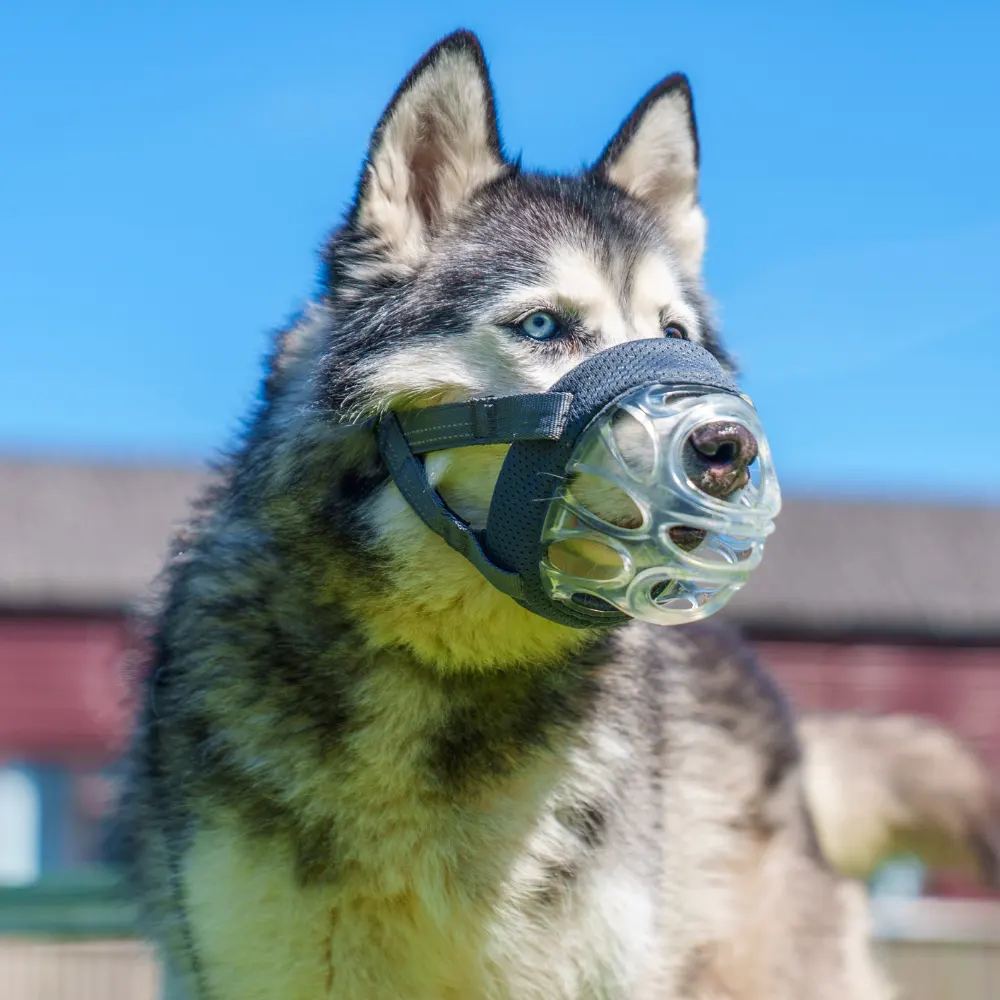
The difference between a muzzle your dog tolerates and one they genuinely accept comes down to comfort. Get it right, and walks become easier for both of you. Get it wrong, and you’ll spend every outing managing a dog who’s fighting their equipment instead of enjoying the walk.
This guide focuses on the practical side of muzzle comfort: how to measure correctly, how to tell if your dog is comfortable, and how to build positive associations through proper acclimatisation.
How a Comfortable Muzzle Changes Everything
Fiona Whelan, Head Behaviourist at our Pet Centre in Chertsey, describes how she used a muzzle with her own rescue dog, Doyle, who was nervous of strangers and other dogs:
“I muzzle trained him and walked him wearing a muzzle. It was like the seas parted when I walked down the road. Everybody moved out of the way, gave him space, didn’t let their kids run up to touch him, didn’t let their dogs come running over. Best thing ever for him because he could just relax and go, goodness me, I’ve got some space.”
This wasn’t about anyone else’s protection – it was about giving Doyle room to breathe. The muzzle signalled to other people that this dog needed space, and they responded. His confidence improved dramatically.
For anxious owners, the effect can be equally powerful. When you know your dog can’t bite even if something goes wrong, you stop gripping the lead so tightly. You can use a longer line. You can be a little bit calmer. You can allow a little interaction to occur, knowing that if the worst comes to the worst, your dog can’t actually bite. And because dogs pick up on our tension, when you relax, they often become calmer too.
None of this works if the muzzle itself is uncomfortable. A dog who’s fighting their equipment isn’t getting these benefits – they’re just stressed about what’s on their face.
How to Measure Your Dog for a Comfortable Fit
Correct sizing is essential for comfort. A muzzle that’s too tight restricts breathing and causes pressure points. One that’s too loose may slip or rub uncomfortably. The simple test: if your dog can’t pant and drink whilst wearing the muzzle, it’s either not the right size or not the right type of muzzle.
Length Measurement (Most Important)
Measure the distance from the tip of your dog’s nose to the base of the nose, just below the eyes. This is the most critical measurement – the tip of your dog’s nose should not touch the end of the muzzle when fitted. There should be space for comfort.
Circumference Measurement
Measure around the circumference of the widest part of the nose, usually just below the eyes. Ideally, measure with your dog’s mouth open to ensure adequate panting room.
Between Sizes?
If your dog falls between sizes, always size up. A slightly roomier muzzle is more comfortable and safer than one that’s borderline too tight.
Customising the Fit
All Baskerville muzzles can be reshaped with hot water for a custom fit. Warm the muzzle basket in hot tap water for one minute, shape it to suit your dog’s face, then place in cold water to lock the shape. Check the fit and repeat if needed. If your dog is a scavenger, keep the anti-scavenge guard in place while remoulding.
Matching Muzzle to Face Shape
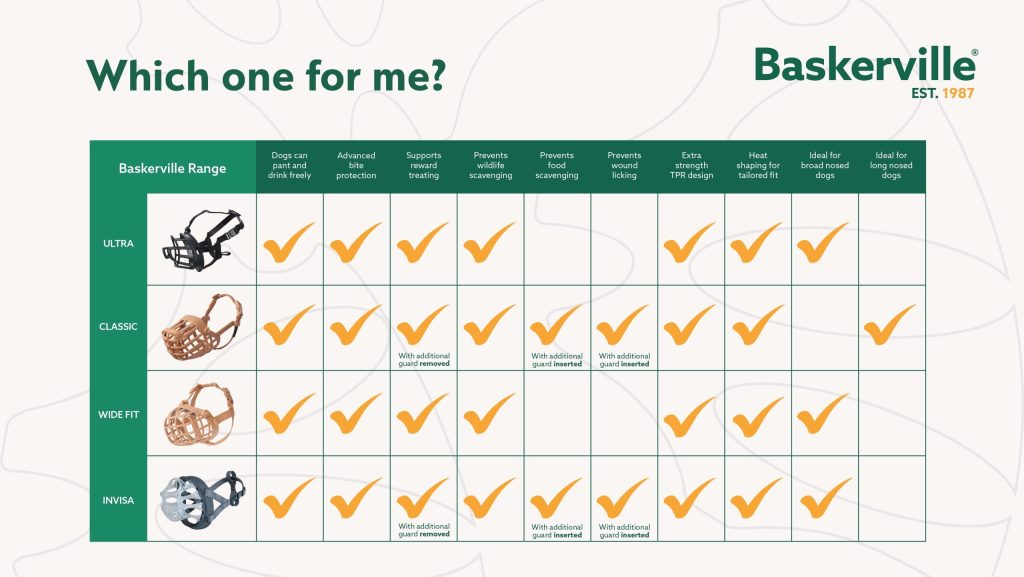
The wrong shape will never be truly comfortable, no matter how carefully you adjust the straps. Baskerville Ultra and INVISA muzzles work well for many face shapes with medium to longer noses such as Labradors, German Shepherds, Cocker Spaniel, Border Collies.
Longer or narrower noses (Collies, Greyhounds, Spaniels, and similar breeds): Standard muzzle shapes like the Baskerville Classic typically work well, providing a secure fit for their face structure.
Broader or shorter faces (Bulldogs, Staffies, Boxers, Pugs, and similar breeds): Need the Baskerville Wide Fit, which provides extra width and panting room. This is particularly important for brachycephalic breeds who already have compromised airways.
Why Soft Muzzles Are Not Safe for Extended Use
Fabric muzzles, mesh muzzles, and other soft designs might look gentler than basket muzzles, but they pose serious risks to your dog’s health and safety.
Restricted Breathing
Soft muzzles work by holding the mouth closed. To prevent biting effectively, they must fit snugly, which inevitably restricts airflow and limits how wide your dog can open their mouth. This compromises their ability to pant – the only way dogs can regulate their body temperature.
Risk of Overheating
Dogs cannot sweat like humans. Panting enables them to inhale cooler air, humidify it, and exhale – facilitating evaporation from their nose and lungs to cool down. A muzzle that restricts panting can lead to overheating, which can be life-threatening, particularly in warm weather, during exercise, or in stressful situations when dogs naturally pant more.
No Drinking, No Treating
A fabric muzzle tight enough to prevent biting won’t allow your dog to drink water or take treats. This makes positive reinforcement during training impossible and creates welfare concerns during any extended wear.
Vomiting Hazard
If your dog needs to be sick while wearing a muzzle, they must be able to do so safely. A soft muzzle that holds the mouth closed creates a choking risk.
Skin Irritation
The snug fit required for soft muzzles to be effective often causes rubbing, especially in warm weather or during stress when dogs pant more heavily.
They Often Don’t Work Anyway
Many soft muzzles are too flimsy to actually do the job owners expect. Determined dogs can still nip or bite through them. For scavenging prevention, dogs wearing soft muzzles can often still eat – they simply squish their nose into whatever they’re after.
Soft muzzles have extremely limited appropriate uses – essentially only for momentary veterinary procedures lasting seconds. For walks, training, extended wear, or any real-world situation, they are not safe. This is why we only produce basket muzzles at Baskerville.
How to Tell If Your Dog Is Comfortable
It’s not always obvious when a dog is uncomfortable, but there are signs to watch for. Learning to read your dog’s body language helps you adjust your approach and ensure the muzzle experience stays positive.
Signs of Discomfort
Scratching or pawing: Persistent attempts to remove the muzzle often indicate discomfort. Rolling or rubbing their face are also common signs.
Whining or whimpering: Vocalisations can be a sign of stress or unease.
Avoidance or hiding: If your dog tries to hide when you bring out the muzzle, they may feel fearful. This means more work is needed to build positive associations.
Body Language to Watch
Subtle indicators can suggest your dog is feeling uneasy: turning or lowering their head, angling their body away from the muzzle, or trying to create distance.
Stronger signals include ears pinned back, a stiff body posture, yawning and lip licking, brief submissive glances, heavy panting, and whale eye (where you can see the whites of their eyes). These cues often appear well before a dog reacts in a more obvious way.
A comfortable, relaxed dog shows soft eyes, a natural posture, and a relaxed body. When your dog is genuinely comfortable in their muzzle, they’ll behave normally – be interested in their surroundings, responsive to you, and not fixating on the muzzle.
https://www.instagram.com/reel/DUT0558DHah/?igsh=bjExeG51ZDdmNTB4
Building Comfort Through Acclimatisation
Even the most comfortable muzzle design feels strange at first. Dogs aren’t born wanting things on their face. Acclimatisation – gradually introducing the muzzle with positive associations – turns a potentially stressful experience into a smooth transition.
Muzzle training takes time. It’s not something you do in five minutes. How long depends on your individual dog: how sensitive they are, what experiences they’ve had before. Dogs who’ve worn head collars tend to be more tolerant of muzzles because they’re already used to wearing something on their face.
Step-by-Step Acclimatisation
Take it slow. Pay attention to your dog’s body language to ensure they’re not feeling stressed. Only move to the next step when your dog is calm and comfortable.
Let them investigate. Before putting the muzzle on, let your dog sniff and explore it. Place treats inside and reward your dog when they voluntarily interact with it.
Keep sessions short. Start by briefly placing the muzzle on without securing it, then immediately remove it. Reward frequently during these short sessions.
Gradually increase time. Slowly build tolerance by increasing the duration in small steps. Every dog is different – some may adapt in days, others need weeks.
Avoid negative associations. If your dog tries to remove the muzzle, don’t say “no” or scold them. Redirect their attention with treats or play instead. Scolding creates negative associations with the muzzle.
Make it positive. Use treats and praise to create a positive emotional response. This isn’t about dog training a behaviour – it’s about helping your dog feel good about wearing the muzzle.
Features That Make Extended Wear More Comfortable
For quick vet visits, almost any properly fitted basket muzzle will do. But for hour-long walks or regular daily use, certain design features make a noticeable difference.
Lightweight Materials
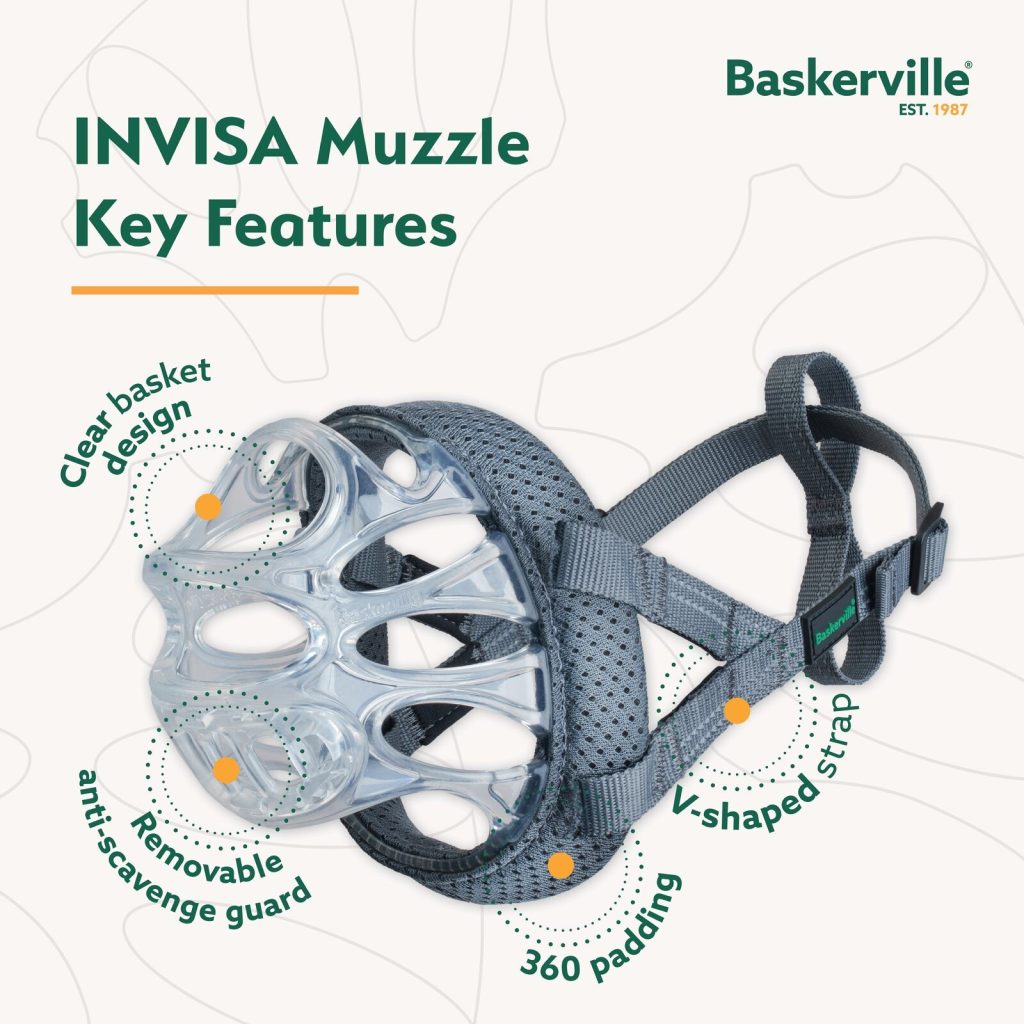
Heavy muzzles such as those made from metal or bulky plastic designscause neck fatigue during extended wear. All Baskerville muzzles use TPR (thermoplastic rubber), which provides strength without excessive weight. The INVISA is the lightest in the range, weighing just 50g in Size 1 up to 220g in Size 6.
Padding
Anywhere the muzzle contacts your dog’s face can become a pressure point over time. The Baskerville INVISA features 360-degree padding around the entire basket rim. The Classic and Wide Fit muzzles feature padded nosebands that cushion the most common pressure point.
Strap Design
The INVISA uses a V-shaped strap system that provides stability without needing a head strap – one less point of contact, one less thing to cause discomfort or distraction during long walks.
Choosing a Muzzle for Long Walks
If extended comfort is your priority, the Baskerville INVISA is designed specifically for this. Lightest weight, most padding, no head strap required. The transparent design also means people can see your dog’s face, which can reduce negative reactions from passers-by.
If your dog also scavenges, both the INVISA and Classic have removable anti-scavenge guards, so you don’t have to choose between comfort and preventing them from eating things they shouldn’t.
For broader-faced breeds, the Wide Fit is the only choice that will be genuinely comfortable – standard shapes simply don’t accommodate their face structure properly.
When It Isn’t Working
If your dog is still struggling despite your efforts:
Take a step back. Remove the muzzle and restart the process more slowly.
Seek expert advice. A dog trainer or behaviourist can provide tailored support for your specific situation.
Consider adjustments. Sometimes a different style of muzzle or a better fit makes all the difference. An uncomfortable or poorly fitted muzzle will hinder acclimatisation no matter how patient you are.
Frequently Asked Questions
What makes a dog muzzle comfortable?
Lightweight construction, padding at contact points, and allowing full mouth movement for panting and drinking. If your dog can’t pant and drink, it’s not the right muzzle or not the right fit.
Are soft muzzles more comfortable than basket muzzles?
No. Soft muzzles hold the mouth closed, preventing panting, drinking, and treating. This creates serious welfare risks including overheating, which can be life-threatening. A basket muzzle that allows natural behaviour is the only safe choice for any wear beyond a few seconds.
How do I know if my dog is comfortable in their muzzle?
A comfortable dog shows relaxed body language – soft eyes, natural posture, interest in surroundings. Signs of discomfort include pawing at the muzzle, stiff posture, avoidance behaviour, or ears pinned back.
Which muzzle is most comfortable for long walks?
The Baskerville INVISA – it’s the lightest in the range with 360-degree padding and no head strap. For broad-faced breeds, the Wide Fit is essential for adequate panting room.
How long does muzzle acclimatisation take?
It varies by dog. Some adapt in days, others need weeks. Dogs who’ve worn head collars before often adjust more quickly. The key is patience and positive associations – never rush the process.
Why trust Company of Animals for muzzle advice?
Company of Animals was founded in 1979 by Dr Roger Mugford, a world-renowned animal psychologist who pioneered reward-based training methods. For over 40 years, our Pet Centre in Chertsey has worked with thousands of dogs through behavioural consultations, training, and rehabilitation. Today, the company is led by Dr Emily Mugford, a veterinary surgeon with over 20 years’ experience in small animal practice. The behavioural guidance in this article comes from Fiona Whelan, our Head Behaviourist, who has over 20 years’ hands-on experience helping dogs and their owners with real-world challenges including muzzle training and acclimatisation.
Making Walks Easier
A comfortable muzzle isn’t just about your dog’s experience – it’s about yours too. When the muzzle fits well and your dog accepts it happily, walks become less about managing equipment and more about enjoying time together.
With each small step in acclimatisation, you’re moving toward happier walks and a more enjoyable experience for both you and your dog.
For fitting advice or training support, our Pet Centre in Chertsey offers behavioural consultations by veterinary referral.