
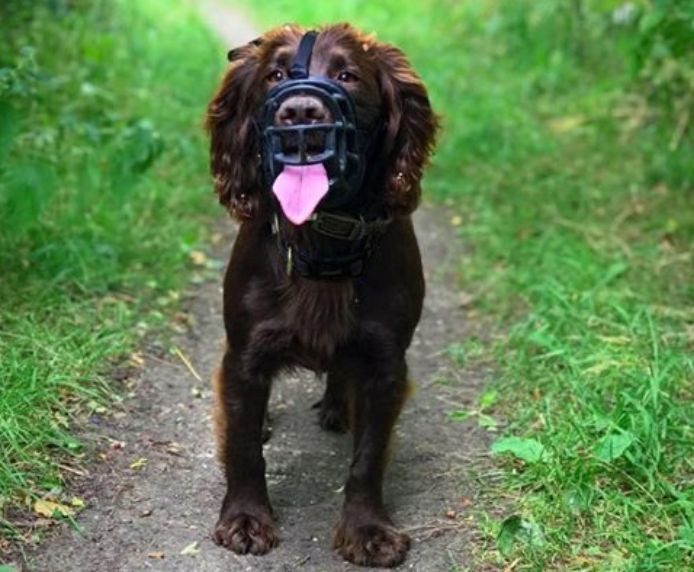
A basket muzzle is the safest and most humane type of muzzle you can choose for your dog. Unlike fabric alternatives that restrict natural behaviour, basket muzzles allow dogs to pant freely, drink water, and receive treats while still providing effective safety. This open design makes them suitable for extended wear during walks, training sessions, and everyday situations where a muzzle is needed.
At Company of Animals, we’ve spent over 40 years developing basket muzzles that put dog welfare first. Our Baskerville range – comprising the Ultra, Classic, Wide Fit, and INVISA – represents everything we’ve learned about what dogs need from a muzzle. Founded by Dr Roger Mugford, world-renowned animal psychologist, and now led by Dr Emily Mugford, CEO and veterinary surgeon, our approach combines behavioural science with practical design.
This guide explains why basket muzzles are recommended by veterinarians and behaviourists, how they compare to other muzzle types, and how to choose the right one for your dog.
What Makes a Basket Muzzle Different
Basket muzzles feature an open, cage-like structure that surrounds your dog’s snout without restricting it. This design creates space between the muzzle and your dog’s face, allowing full mouth movement while preventing biting.
The key advantage is simple: your dog can behave naturally. They can open their mouth wide enough to pant, which is essential for temperature regulation. They can drink water from a bowl. They can take treats during training. They can even vomit safely if needed – a critical safety consideration that’s often overlooked.
This matters because dogs don’t sweat like humans. Panting is their primary cooling mechanism. When a dog pants, they rapidly inhale cooler air, humidify it, and exhale – this facilitates evaporation from their nose and lungs, helping them cool down. Any muzzle that restricts panting puts your dog at risk of overheating, particularly during exercise, in warm weather, or in stressful situations.
Basket Muzzle vs Soft Muzzle: Why the Difference Matters
Fabric muzzles, sometimes called soft muzzles or sleeve muzzles, work by holding the dog’s mouth closed. While they might appear gentler or less intimidating than basket muzzles, they create serious welfare concerns that every dog owner should understand.
The Problem with Fabric Muzzles
Restricted breathing. To prevent biting effectively, fabric muzzles must fit snugly around the snout. This inevitably restricts airflow and limits how wide your dog can open their mouth. The result is compromised panting, which can lead to respiratory difficulties and dangerous overheating.
No drinking or treating. A fabric muzzle that’s tight enough to prevent biting won’t allow your dog to drink water or receive treats. This makes them unsuitable for walks, training sessions, or any situation lasting more than a few minutes.
Vomiting risk. If a dog wearing a fabric muzzle needs to vomit – whether from stress, illness, or eating something they shouldn’t – they cannot do so safely. This creates a choking hazard that can be life-threatening.
Skin irritation. The snug fit required for fabric muzzles to work often causes rubbing and irritation, particularly during extended wear or in warm weather when dogs are panting more.
When Fabric Muzzles Might Be Used
Fabric muzzles have extremely limited appropriate uses. They may be used by veterinary professionals for very brief procedures – lasting seconds rather than minutes – where a quick, temporary restraint is needed. Even in these situations, many vets prefer basket muzzles because they allow better monitoring of the dog’s breathing.
For any situation involving walks, training, travel, grooming appointments, or wearing time beyond a few moments, fabric muzzles are not appropriate. This is why the entire Baskerville range consists of basket muzzles – we won’t compromise on dog welfare.
Benefits of Basket Muzzles for Everyday Use
Basket muzzles are safe for everyday use when correctly fitted. Here’s what makes them practical for regular situations:
Safe for long walks. Because basket muzzles allow full panting, your dog can exercise normally while wearing one. This makes them suitable for daily walks, hikes, and outdoor activities. Dogs can maintain their normal body temperature even during vigorous exercise.
Training-friendly. Reward-based training relies on treats to reinforce good behaviour. Basket muzzles allow you to deliver treats through the openings, meaning you can continue positive reinforcement training while your dog wears a muzzle. This is essential for behaviour modification work.
Hydration access. Dogs wearing basket muzzles can drink from bowls normally. This is particularly important during warm weather, after exercise, or for longer outings where access to water is essential.
Reduced stress. Because basket muzzles don’t restrict natural behaviour, dogs typically find them less stressful to wear than alternatives. A dog that can pant, drink, and receive treats is a dog that can relax – which often makes the muzzle-wearing experience positive rather than negative.
The Baskerville Basket Muzzle Range
All four Baskerville muzzles are basket muzzles, each designed with specific needs in mind. They share key features: TPR (thermoplastic rubber) construction for durability and comfort, adjustable straps for secure fit, and the ability to be reshaped with hot water for a custom fit.
Baskerville Ultra
The Ultra is built for durability and active dogs. Its robust construction handles daily use while the ergonomic design ensures comfort during longer walks and training sessions. The Ultra is ideal for dogs who need a reliable, hard-wearing muzzle for regular use.
Key features: Extra-strong TPR material, ergonomic fit, suitable for broad and long-nosed dogs, allows panting, drinking, and treating.
Baskerville Classic
The Classic includes a removable anti-scavenge guard, making it the go-to choice for dogs who eat things they shouldn’t on walks. Whether your dog targets discarded food, fox droppings, or random objects, the Classic’s guard prevents them from picking things up while still allowing panting and drinking.
The Classic is particularly well-suited to dogs with narrower or longer noses and features a padded noseband for comfort. It’s also useful for preventing wound licking during recovery from surgery or injury.
Key features: Removable anti-scavenge guard, padded noseband, ideal for long-nosed breeds, prevents food scavenging and wound licking.
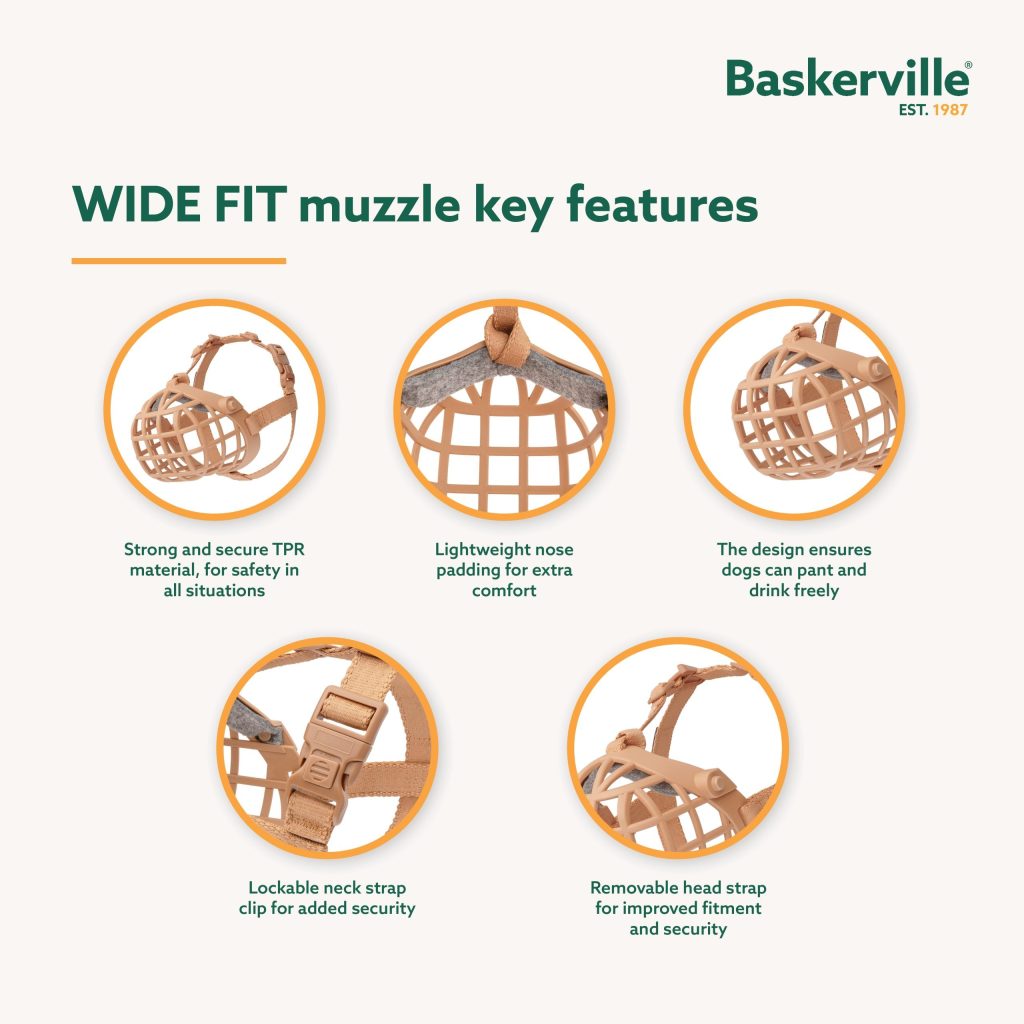
Baskerville Wide Fit
The Wide Fit is designed specifically for dogs with broader snouts. Brachycephalic breeds like Bulldogs, Pugs, Boxers, and Staffies often struggle with standard muzzle shapes – the Wide Fit provides a more accommodating fit that doesn’t pinch or restrict these shorter, wider face shapes.
Key features: Wider basket design, padded noseband, secure fit for broad-nosed breeds, full panting room for breeds that already have compromised airways.
Baskerville INVISA
The INVISA features a transparent basket design that allows people to see your dog’s face rather than just the muzzle. This helps reduce the stigma often associated with muzzled dogs – passers-by can see your dog’s expression, making encounters less tense for everyone.
The INVISA is the lightest muzzle in the range, weighing just 50g in Size 1 up to 220g in Size 6. It includes 360-degree padding for superior comfort, a V-shaped strap that provides stability without needing a head strap, reflective stitching for nighttime visibility, and a removable anti-scavenge guard.
Key features: Transparent design, 360-degree padding, lightest in range, V-shaped strap system, reflective stitching, removable anti-scavenge guard.
Choosing the Right Basket Muzzle for Your Dog
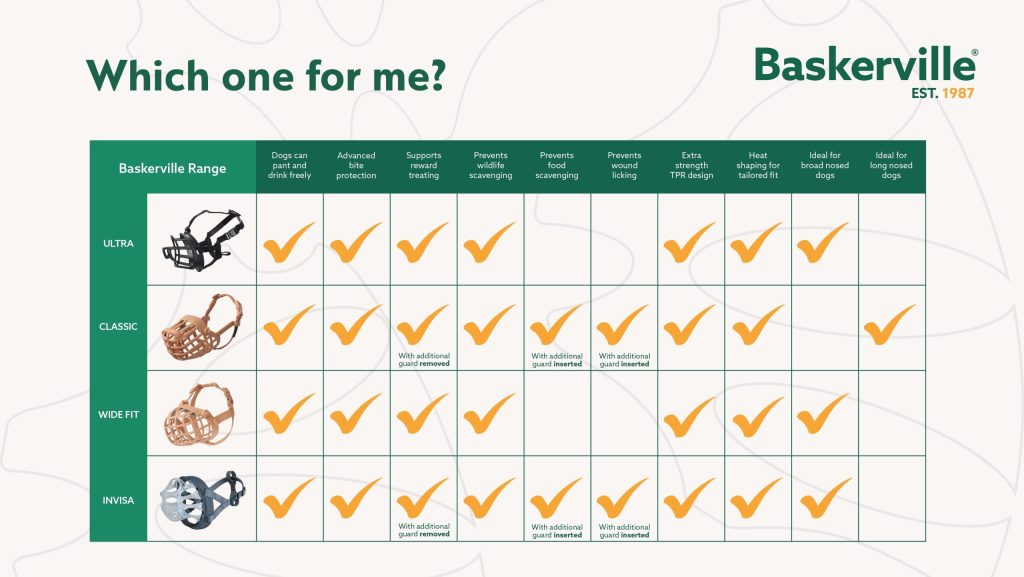
With four basket muzzles in the Baskerville range, choosing the right one depends on your dog’s face shape, your primary purpose, and your preferences.
By Face Shape
Long or narrow noses: Baskerville Classic or Ultra. Breeds like Collies, Greyhounds, Labradors, and German Shepherds typically suit these designs.
Broad or short noses: Baskerville Wide Fit. Breeds like Bulldogs, Pugs, Boxers, Staffies, and Rottweilers need the extra width this muzzle provides.
Medium faces: Any Baskerville muzzle in the correct size. The INVISA works well for many medium-faced dogs and offers the added benefit of transparency.
By Purpose
Scavenging prevention: Baskerville Classic or INVISA – both feature anti-scavenge guards that prevent dogs from picking up food waste, rocks, or other items.
Wound licking prevention: Baskerville Classic – the anti-scavenge guard also prevents access to wounds during recovery.
General safety and vet visits: Any Baskerville muzzle – all provide effective bite prevention while allowing natural behaviour.
Long walks and maximum comfort: Baskerville INVISA – the 360-degree padding and lightweight design reduce fatigue during extended wear.
Reducing stigma: Baskerville INVISA – the transparent design helps people see your dog rather than just the muzzle.
Active dogs and durability: Baskerville Ultra – the extra-strong construction handles rough use.
Fitting Your Basket Muzzle Correctly
A basket muzzle only works properly when it fits correctly. Too tight and you restrict your dog’s ability to pant; too loose and the muzzle may slip or rub uncomfortably.
Measuring Your Dog
Length (most important): Measure from the tip of your dog’s nose to the base of the nose, just below the eyes. The tip of your dog’s nose should not touch the end of the muzzle when fitted.
Circumference: Measure around the widest part of your dog’s muzzle, usually just below the eyes. Ideally, measure with your dog’s mouth open to ensure adequate panting room.
If your dog falls between sizes, always size up. A slightly roomier muzzle is safer than one that’s too tight.
Customising the Fit
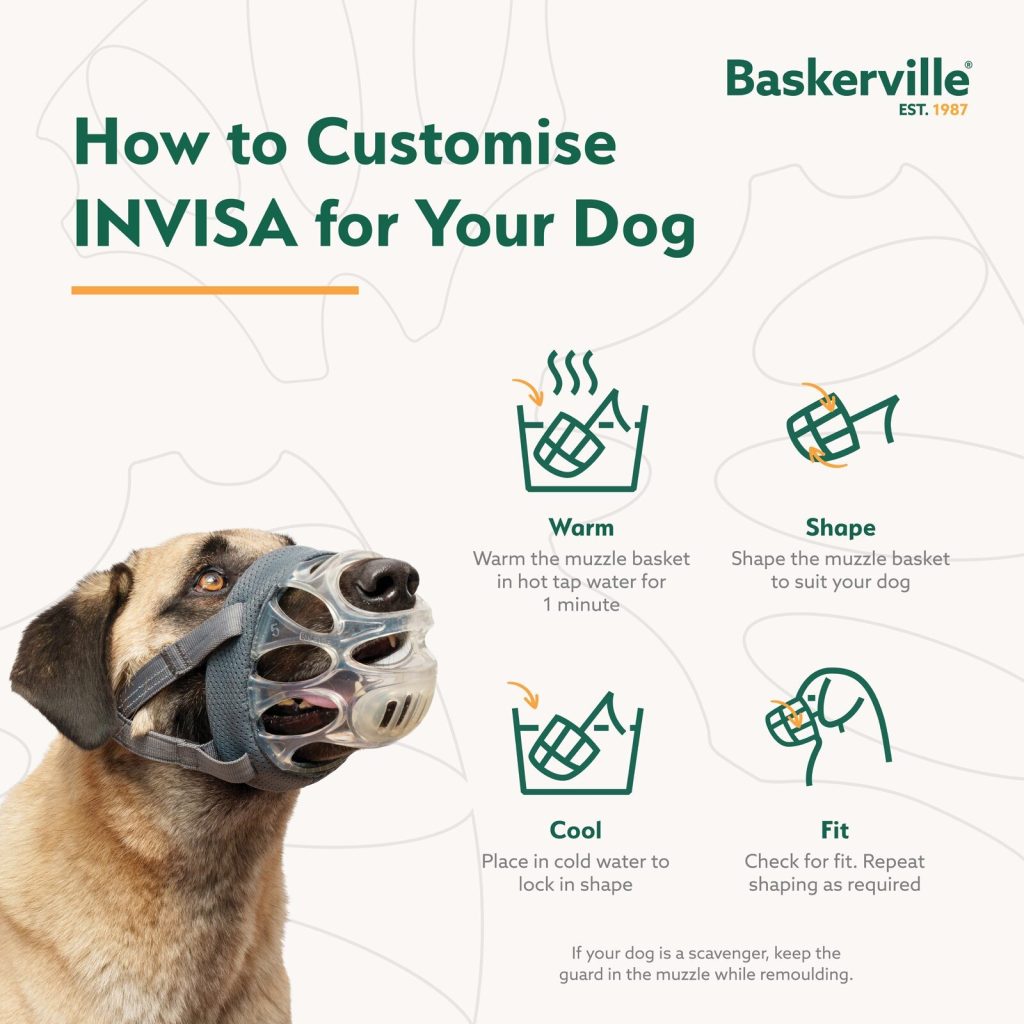
All Baskerville muzzles are made from TPR material, which can be reshaped with hot water for a custom fit. This is particularly useful if your dog’s face shape doesn’t perfectly match standard sizing.
To reshape: Warm the muzzle basket in hot tap water for one minute. Shape the basket to suit your dog’s face. Place in cold water to lock the shape. Check the fit and repeat if needed. If your dog is a scavenger, keep the anti-scavenge guard in place while remoulding.
Signs of Correct Fit
A correctly fitted basket muzzle should allow your dog to open their mouth fully, pant with their tongue out, drink water from a bowl, and take treats through the basket openings. The straps should be snug but not tight, and the muzzle should not slip or rotate on your dog’s face.
Best Practices for Basket Muzzle Use
Never leave your dog unsupervised. Even with a well-fitted basket muzzle, dogs should not be left alone while wearing one. Muzzles can catch on objects, and dogs may become distressed if they cannot remove them.
Monitor in hot weather. While basket muzzles allow panting, dogs still work harder to regulate temperature when wearing any equipment on their face. In warm weather, take extra care, provide frequent water breaks, and avoid strenuous exercise.
Train before you need it. Introducing a muzzle gradually through positive association creates a much better experience than forcing one on in an emergency. Take time to train your dog to accept their muzzle happily before you actually need to use it.
Check fit regularly. Dogs’ faces can change with age, weight fluctuation, or health conditions. Periodically check that your muzzle still fits correctly and hasn’t become worn or damaged.
Use for the right reasons. Muzzles are safety tools, not solutions to underlying behavioural issues. If your dog needs a muzzle for behaviour reasons, work with a qualified behaviourist to address the root cause alongside using the muzzle for management.
A Note on Chewing Prevention
Some owners consider muzzles to prevent destructive chewing at home. While a basket muzzle can physically prevent chewing, this is not an appropriate use. Dogs should never be left unsupervised while wearing a muzzle, and addressing the underlying cause of destructive behaviour – whether boredom, anxiety, or lack of appropriate outlets – is always the better approach.
Frequently Asked Questions
Is a basket muzzle safe for long walks?
Yes, if correctly fitted with adequate panting room. Basket muzzles allow dogs to regulate their body temperature through panting, making them suitable for walks of any length. Always ensure your dog has access to water and monitor them in warm weather.
Can my dog drink water with a basket muzzle?
Yes. Dogs should be able to drink, take treats, and even vomit if necessary when wearing a properly fitted basket muzzle. The open design allows access to water bowls and treat delivery through the basket openings.
Is a basket muzzle better than a fabric muzzle?
Yes. Fabric muzzles hold the mouth closed, restricting panting and preventing dogs from regulating their body temperature. This can lead to overheating, respiratory difficulties, and skin irritation. Fabric muzzles also prevent drinking, treating, and safe vomiting. For anything beyond momentary veterinary use, basket muzzles are the only appropriate choice.
Can a basket muzzle prevent biting completely?
No muzzle is 100% bite-proof. However, Baskerville basket muzzles are made from super-strong TPR material which provides advanced bite protection. This is significantly more effective than silicone muzzles, which are flexible, soft, and can be bitten through by determined dogs. A correctly fitted Baskerville muzzle substantially reduces bite risk.
How long can my dog wear a basket muzzle?
This depends on the individual dog and situation. A correctly fitted basket muzzle can be worn for reasonable periods during walks, training sessions, or outings. However, dogs should never be left unsupervised while wearing a muzzle, and in hot weather you should monitor closely and provide regular breaks.
Are basket muzzles comfortable for dogs?
Yes, when properly fitted and introduced through positive training. The open design allows natural behaviour – panting, drinking, treating – which makes basket muzzles far more comfortable than restrictive alternatives. Features like padded nosebands (on Classic and Wide Fit) and 360-degree padding (on INVISA) add extra comfort for extended wear.
Making the Right Choice for Your Dog
Choosing a basket muzzle over other types is a decision that prioritises your dog’s welfare. The ability to pant, drink, and receive treats isn’t a luxury – it’s essential for your dog’s physical health and emotional wellbeing.
The Baskerville range offers a basket muzzle for every dog and every situation. Whether you need scavenging prevention, maximum comfort for long walks, a design suited to a broader face shape, or simply want to reduce muzzle stigma, there’s a Baskerville option that fits.
For expert guidance on muzzle selection, fitting, or training, our Pet Centre in Chertsey offers behavioural consultations with experienced professionals who understand the practical challenges of living with dogs who need muzzles.