
If your dog has bitten – or you’re worried they might – you’re probably searching for answers. How do you stop a dog from biting? The honest answer is that there’s no quick fix, but there are proven approaches that address the real reasons behind the behaviour.
This guide explains why dogs bite, why punishment makes things worse, and how to work towards lasting change through understanding, training, and – when needed – professional support.
Understanding Why Dogs Bite
Before you can address biting, you need to understand it. Biting isn’t random aggression or a sign of a “bad dog.” It’s communication – often the last resort when everything else has failed.
Dogs bite for reasons. They might bite in fear, in pain, in defence when they feel threatened or harassed. They might bite when someone continues to interact with them after they’ve tried to signal they want to be left alone. Biting is a normal part of dog behaviour – we don’t always like it, but dogs are animals, and using their teeth is part of how they navigate the world.
Biting Is Usually a Last Resort
Most dogs don’t want to bite. They try everything else first. Consider a common scenario: a toddler follows a dog around the house. The dog gets up and walks away. The child follows. The dog gets on the sofa, trying to create distance. The child follows. The dog tries to hide. The child keeps coming.
Throughout this, the dog has been signalling discomfort – yawning, turning their face away, avoiding eye contact, showing subtle body language that says “please stop.” Eventually, if none of this works, the dog may growl or show teeth. If that doesn’t work either, they may bite.
That bite isn’t the beginning of aggression – it’s the end of a long chain of communication that wasn’t heard.
When Biting Becomes Learned Behaviour
Once a dog learns that biting successfully makes unwanted things stop – a person backs away, a situation ends – they may use it again. This isn’t the dog being “dominant” or “bad.” It’s simply learning: this behaviour works.
This is why addressing the root cause matters so much. Managing the behaviour without understanding it often leads to escalation.
Recognising the Warning Signs Before a Bite
Dogs rarely bite without warning. The problem is that many of the early warnings are subtle, and we often miss them.
Subtle Warning Signs
These early signals are easy to overlook: yawning when not tired, lip licking, turning the head or body away, avoiding eye contact, blinking slowly, a closed or tense mouth, lifting a front paw, or simply trying to move away from the situation.
Clearer Warning Signs
If the subtle signals are ignored, dogs escalate to more obvious warnings: ears pinned back, a stiff or frozen body posture, whale eye (showing the whites of their eyes), growling, snarling, or showing teeth.
These signals often appear well before a dog reacts physically. Learning to recognise them gives you the opportunity to intervene – to remove the dog from the situation or address whatever is causing their distress.
Never Punish Growling
Growling is a warning. If you punish a dog for growling, you remove the warning – but not the underlying discomfort. The dog learns that growling leads to punishment, so they stop growling. But they’re still uncomfortable, and now they may go straight to biting without warning.
As behaviourists often say: punishing a growl is like taking the batteries out of a smoke alarm. It stops the noise, but doesn’t address the fire.
Why Punishment Doesn’t Work
When a dog bites, it’s natural to feel frustrated, scared, or angry. But punishing the dog after a bite doesn’t help – and usually makes things worse.
By the time a dog has bitten, they’re already over threshold. They’re in a state where they can’t take in new information, can’t make calm decisions, can’t think straight. Punishment at this point doesn’t teach them anything. It just makes them feel worse.
Worse still, punishment after biting can increase the likelihood of future bites. The dog associates the punishment with the situation, not with their own behaviour. They become more anxious, more defensive, more likely to bite again.
This doesn’t mean you should reward biting. It means you need to address the root cause – why the dog felt they needed to bite in the first place – rather than focusing on the bite itself.
https://www.instagram.com/reel/DTi0GTsjDU6/?igsh=MWkwaDhrdWJ1cGpnbA==
Addressing the Root Cause
Stopping a dog from biting requires understanding why they’re biting. Is it fear? Pain? Resource guarding? Frustration? Each cause requires a different approach.
Rule Out Medical Issues
Pain can cause biting. A dog with an undiagnosed injury, dental problem, or chronic condition may bite when touched in certain ways. If your dog’s behaviour has changed suddenly, or if they bite in specific situations involving touch, a veterinary examination should be your first step.
Identify Triggers
What situations lead to biting or near-biting? Being approached while eating? Meeting strangers? Children? Other dogs? Certain types of handling? Identifying patterns helps you understand what your dog finds threatening or overwhelming.
Manage While You Train
While working on the underlying behaviour, prevent situations where biting might occur. This isn’t avoidance – it’s responsible management that stops your dog from practising the behaviour you’re trying to change.
Building Gentler Behaviour Through Training
Training a dog to be gentle with people isn’t about suppressing aggression – it’s about building confidence, teaching appropriate responses, and creating positive associations.
Socialisation and Habituation
For younger dogs especially, broad socialisation helps prevent fear-based biting. This means positive exposure to many different types of people – not just how they look, but how they move and what they wear. Big people, small people, people wearing hats, masks, high-vis vests, motorcycle helmets. People carrying things, moving quickly, behaving unpredictably.
But socialisation must be positive. Forcing a nervous dog into overwhelming situations creates negative associations, not confidence.
Handling Practice
Regular, gentle handling – touching ears, feet, tail, mouth – builds tolerance and trust. Start with brief, positive sessions and reward calm acceptance. This is particularly important for preventing biting during vet visits or grooming.
Teaching Calm Interactions
Dogs can learn that meeting people involves calm behaviour, not jumping, mouthing, or rough play. Teaching a sit before greeting, rewarding four feet on the floor, and ensuring interactions are positive but controlled all help establish appropriate patterns.
Teaching Flight as an Option
If your dog is getting uncomfortable – with children, with guests, with any situation – teach them that moving away is an effective response. Instead of waiting for them to escalate, encourage them to come away with you. Give them something else to do. Provide a time out.
When dogs learn that flight works – that they can remove themselves from uncomfortable situations and that you’ll support this – they’re much less likely to resort to fight.
The Role of Muzzles in Behaviour Modification
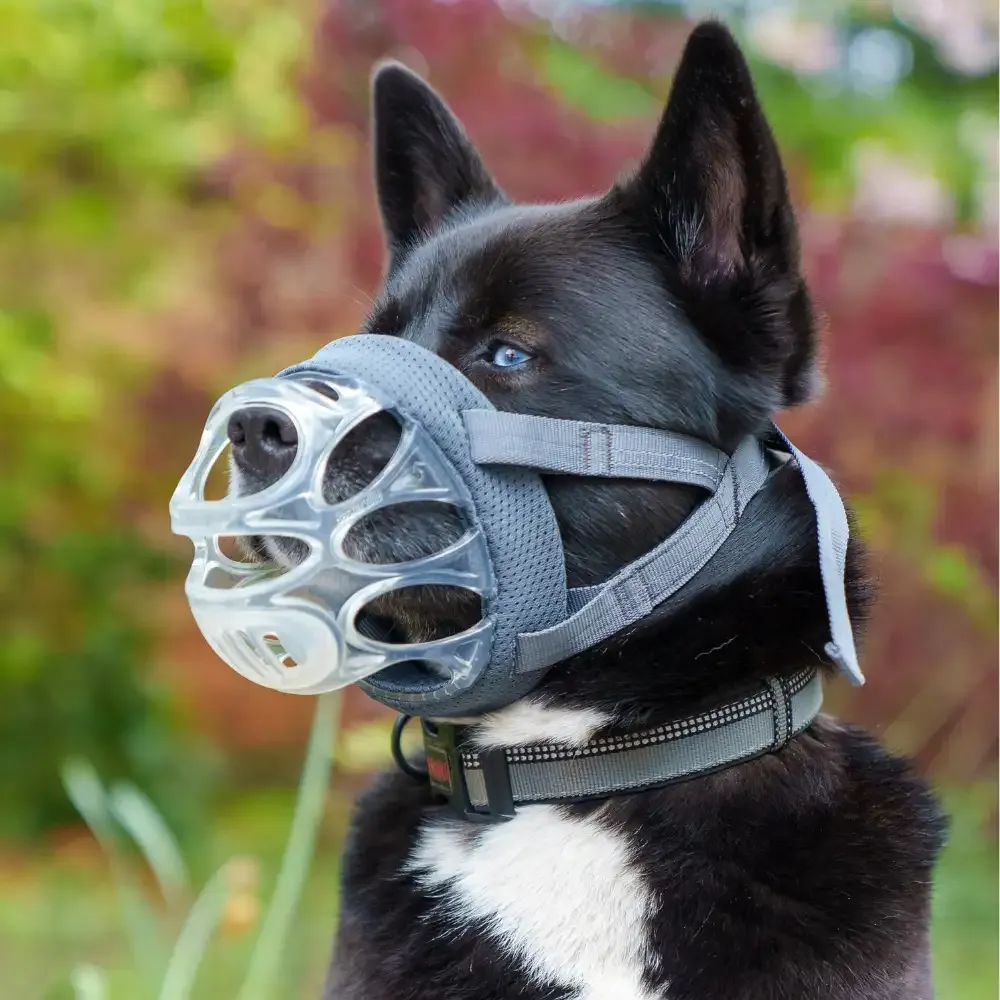
A muzzle won’t stop a dog from wanting to bite. It won’t address fear, pain, or frustration. But used correctly, it can be an important tool while you work on the underlying behaviour.
Fiona Whelan, Head Behaviourist at our Pet Centre in Chertsey, puts it simply:
“Don’t see putting a muzzle on your dog as a failure on your part, because it’s not. You’re protecting your dog, you’re protecting yourself, and you’re protecting others. That muzzle should be seen as a tool to help you achieve the end result of rehabilitating your dog. Don’t feel like a failure – feel like a hero for doing something for your dog.”
When Muzzles Help
If your dog has shown inclination to bite – people or other dogs – a muzzle during training sessions provides a safety net. It allows you to work on behaviour modification without the risk of another incident setting back your progress.
Muzzles also help anxious owners relax. When you’re constantly worried your dog might bite, you grip the lead tighter, your body language becomes tense, and your dog picks up on your stress. Knowing they can’t bite even if things go wrong allows you to be calmer.
What Muzzles Don’t Do
A muzzle is management, not a solution. You still need to address why your dog wants to bite. Using a muzzle without behaviour modification simply contains the problem – it doesn’t resolve it.
A well-fitted, quality basket muzzle will prevent most biting, but it must be the right muzzle, properly fitted. Cheap silicone copies and fabric muzzles often don’t do the job – they can be bitten through or squash flat under pressure.
When to Seek Professional Help
If your dog has bitten, or you’re concerned about biting behaviour, professional support is strongly recommended. Behaviour modification for biting is complex, and getting it wrong can make things worse.
A qualified behaviourist can identify the root cause of the behaviour, create a tailored modification plan, and guide you through implementation safely.
Don’t feel embarrassed about seeking help. Most people who consult behaviourists are there because they want to do the right thing by their dog. Things happen, situations develop, and wanting to change them is exactly the right response.

Frequently Asked Questions
What is the fastest way to stop a dog from biting?
There is no quick fix. Biting behaviour requires understanding the root cause and addressing it through consistent training and, often, professional guidance. Management tools like muzzles can prevent bites while you work on the underlying behaviour, but lasting change takes time and patience.
Should I punish my dog for biting?
No. By the time a dog has bitten, they’re already over threshold and can’t learn from punishment. Punishing after a bite often increases anxiety and can make future biting more likely. Focus on the root cause and preventing situations where biting might occur.
How do I train my dog to be gentle with people?
Through positive socialisation, regular gentle handling, and teaching calm interactions. Help your dog have positive experiences with many different types of people, practice handling exercises with rewards, and teach them that calm behaviour leads to good things.
Can muzzles help prevent biting?
A well-fitted basket muzzle can prevent most bites and is a useful management tool while working on behaviour modification. However, muzzles don’t address why a dog wants to bite – they must be used alongside proper training and, where needed, professional support.
When should I consult a behaviourist about biting?
If your dog has bitten, or if you’re concerned about escalating warning signs, seek professional help. A qualified behaviourist can identify the root cause and create a safe, effective modification plan. Behavioural consultations at our Pet Centre require veterinary referral to ensure medical factors are ruled out first.
Why trust Company of Animals for advice on dog biting?
Company of Animals was founded in 1979 by Dr Roger Mugford, a world-renowned animal psychologist who pioneered reward-based training methods. For over 40 years, our Pet Centre in Chertsey has worked with thousands of dogs through behavioural consultations, training, and rehabilitation – including many cases involving biting and aggression. Today, the company is led by Dr Emily Mugford, a veterinary surgeon with over 20 years’ experience. The guidance in this article comes from Fiona Whelan, our Head Behaviourist, whose hands-on experience includes working with dogs displaying challenging behaviours in real-world situations.
Moving Forward
Biting behaviour is serious, but it’s not hopeless. Dogs bite for reasons, and when you understand those reasons, you can work towards change.
Nobody chooses to bring their dog up badly. Things happen, situations develop, and now you’re looking for help. That’s exactly the right response. With patience, the right approach, and professional support when needed, most dogs can learn different ways of responding to the situations that currently trigger biting.
For fitting advice on Baskerville muzzles or to learn more about behavioural consultations at our Pet Centre, visit our website or contact us directly.