
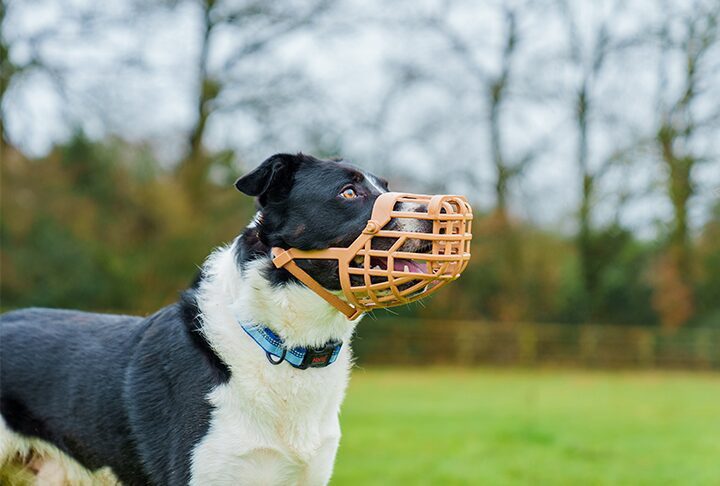
A dog muzzle is one of the most misunderstood tools in responsible dog ownership. Far from being a sign of a dangerous dog, a well-fitted muzzle is a proactive safety measure that protects your dog, other animals, and people in situations where extra precaution makes sense. Whether you’re preparing for vet visits, managing scavenging behaviour, or supporting a nervous dog through busy environments, understanding how to choose and use a muzzle properly makes all the difference.
At Company of Animals, we’ve worked with thousands of dogs through our Pet Centre in Chertsey since 1979. Founded by Dr Roger Mugford, world-renowned animal psychologist, and now led by Dr Emily Mugford, CEO and veterinary surgeon with over 20 years’ experience in small animal practice, our approach has always centred on understanding behaviour first. Emily’s veterinary background means every product is evaluated through the lens of animal welfare – ensuring tools like muzzles are designed to strengthen the bond between pets and their families.
As Fiona Whelan, Head Behaviourist at the Pet Centre, often tells owners: “Don’t see putting a muzzle on your dog as a failure on your part, because it’s not. You’re actually protecting your dog, protecting yourself, and protecting others.”
This guide covers everything you need to know about dog muzzles, from choosing the right type to training your dog to wear one comfortably.
Why Every Dog Should Be Muzzle Trained
Muzzle training isn’t just for dogs with behavioural challenges. Think of a muzzle like a seatbelt – it’s not about expecting something bad to happen, but about being prepared if it does.
Every dog, regardless of size, breed, or temperament, can benefit from being comfortable wearing a muzzle. There are several practical reasons to train early:
Veterinary and grooming visits can be stressful for many dogs. Even normally calm dogs may react unexpectedly when they’re in pain or frightened. Vets and groomers appreciate working with muzzle-trained dogs because it keeps everyone safer and often makes the experience less stressful for the dog too.
Emergencies and injuries present unpredictable situations. An injured dog may bite out of fear or pain, even when their trusted owner is trying to help. If your dog is already comfortable wearing a muzzle, you can use one during first aid without adding to their distress.
Travel and legal requirements vary by location. Some countries, airlines, and public transport systems require certain breeds or sizes of dogs to be muzzled. A dog who’s already trained will handle these situations calmly. Breed-specific legislation, such as requirements for XL Bullies in the UK, means some dogs must be muzzled in public by law – this doesn’t mean they’ve done anything wrong.
Preventing scavenging is a common concern for many owners. Dogs who eat everything they find on walks, from discarded food to fox droppings, face real health risks. A muzzle with an anti-scavenge guard can prevent this behaviour while you work on training.
The key insight from behavioural experts is simple: it’s far easier to teach a puppy to accept a muzzle than an adult dog who’s never worn one. By introducing muzzle training early, you’re preparing for any situation that might arise in the future.
When to Use a Dog Muzzle
Muzzles serve different purposes depending on your dog’s needs and circumstances. Understanding when a muzzle can help allows you to use this tool thoughtfully.
During behaviour training sessions, particularly for dogs who have shown reactive or nervous behaviour, a muzzle provides a safety net. This allows both owner and dog to relax slightly during training, which often leads to better progress. When owners are anxious and tense, dogs pick up on this, creating a cycle that’s hard to break.
Fiona Whelan describes how she used this approach with her own rescue dog, Doyle, who was nervous of strangers and other dogs: “I muzzle trained him and walked him wearing a muzzle. It was like the seas parted when I walked down the road. Everybody moved out of the way, gave him space, didn’t let their kids run up to touch him, didn’t let their dogs come running over. Best thing ever for him because he could just relax.”
At the vet or groomer, muzzles protect both professionals and dogs. Many veterinary procedures are uncomfortable, and a previously gentle dog may react differently when in pain. A muzzle allows treatment to proceed safely, which often makes the whole experience quicker and less stressful.
Post-surgery recovery is another common use. Dogs instinctively want to lick wounds, which can delay healing and cause infection. While recovery collars work for some dogs, others find a comfortable muzzle less restrictive. The Baskerville Classic and INVISA muzzles can help prevent wound licking during recovery.
In busy or unpredictable environments, muzzles provide peace of mind. Crowded parks, public transport, or unfamiliar settings can overwhelm some dogs. A muzzle gives nervous dogs the space they need – other people tend to give muzzled dogs more room, which reduces stress.
Types of Dog Muzzles Explained
Not all muzzles are equal. The type you choose directly affects your dog’s comfort, safety, and ability to behave naturally.
Basket Muzzles
Basket muzzles are widely recommended by veterinarians and behaviourists because they allow dogs to pant, drink, and receive treats while wearing them. The open structure means air flows freely, preventing overheating. This is why the entire Baskerville range consists of basket muzzles – they’re simply the safest, most welfare-friendly option available.
Quality basket muzzles are made from durable materials like TPR (thermoplastic rubber), which provides strength without excessive weight. This material can also be reshaped with hot water, allowing you to customise the fit for your dog’s face shape. All Baskerville muzzles use this material, making them strong enough to provide advanced bite protection while remaining comfortable for extended wear.
The Baskerville Basket Muzzle Range
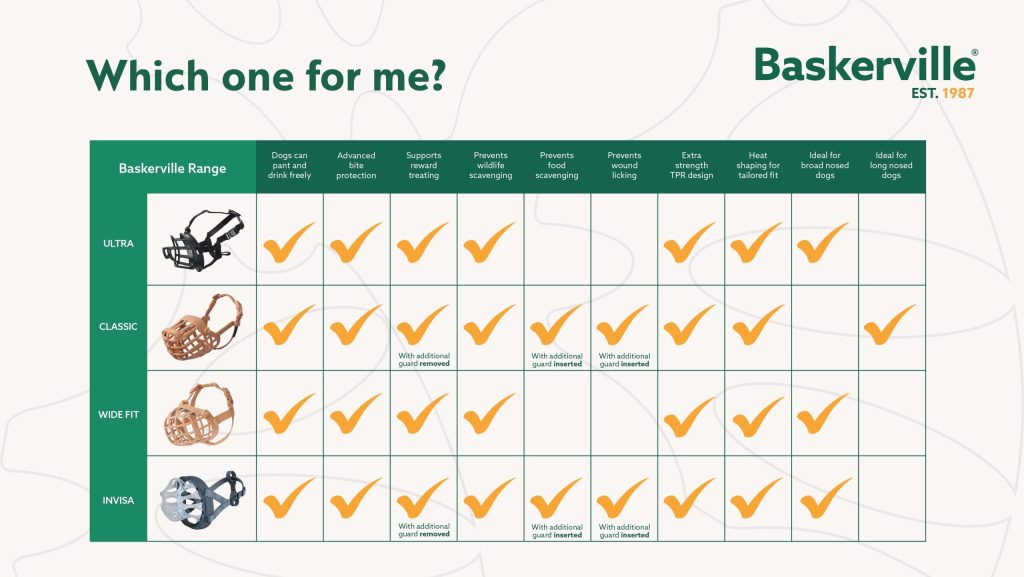
The Baskerville range offers four basket muzzle options, each designed for different needs:
Baskerville Ultra offers exceptional durability for active dogs. Its robust construction handles daily use while the ergonomic design ensures comfort during longer walks and training sessions.
Baskerville Classic includes a removable anti-scavenge guard, making it ideal for dogs who eat things they shouldn’t. It’s particularly well-suited to dogs with narrower or longer noses and features a padded noseband for comfort. The Classic is also useful for preventing wound licking during recovery.
Baskerville Wide Fit is designed specifically for dogs with broader snouts, including brachycephalic breeds and those with shorter, wider face shapes. It features a padded noseband and provides a more accommodating fit while maintaining security.
Baskerville INVISA features a transparent basket design that allows people to see your dog’s face rather than just the muzzle. It’s the lightest muzzle in the range, weighing just 50g in Size 1 up to 220g in Size 6. The INVISA includes 360-degree padding for improved comfort, a V-shaped strap that provides stability without needing a head strap, reflective stitching for nighttime visibility, and a removable anti-scavenge guard.
Fabric and Soft Muzzles
Fabric muzzles hold the mouth closed, which prevents panting. This creates serious welfare concerns because dogs regulate body temperature through panting. Without this ability, they can overheat quickly, particularly in warm weather or stressful situations.
Soft muzzles also prevent dogs from drinking, taking treats, or vomiting if needed. For these reasons, fabric muzzles should only be used for very short periods under direct supervision – never for walks, training, or extended wear.
When owners ask whether soft muzzles are more comfortable than basket muzzles, the answer is consistently no. A properly fitted basket muzzle allows natural behaviour while a fabric muzzle restricts it. This is why we only produce basket muzzles at Baskerville.
How to Choose the Right Dog Muzzle
Selecting the right muzzle involves considering your dog’s face shape, what you need the muzzle for, and the quality of construction.
Face shape matters. Dogs with long, narrow snouts suit the Baskerville Classic, while those with shorter, broader faces need the Wide Fit. A muzzle that’s too tight restricts breathing; one that’s too loose may slip or rub uncomfortably.
Consider the purpose. If scavenging is your main concern, the Baskerville Classic or INVISA with their anti-scavenge guards are ideal choices. For general safety or vet visits, any Baskerville muzzle will work well. If you’re concerned about stigma, the transparent INVISA design allows people to see your dog’s face. For long walks, the INVISA’s 360-degree padding offers the most comfort.
Dog Muzzle Sizing Guide
Proper fit is essential for both comfort and safety. A well-fitted muzzle should allow your dog to open their mouth fully, pant freely, drink water, and receive treats. The tip of your dog’s nose should not touch the end of the muzzle.
How to Measure Your Dog
Length measurement (most important): Measure the distance from the tip of your dog’s nose to the base of the nose, just below the eyes. This is the most important measurement when fitting a muzzle.
Circumference measurement: Measure around the widest part of your dog’s muzzle, usually just below the eyes. Ideally, measure with your dog’s mouth open to ensure adequate panting room.
If your dog falls between sizes, always size up. A slightly roomier muzzle is safer than one that’s too tight.
Customising the Fit with Hot Water
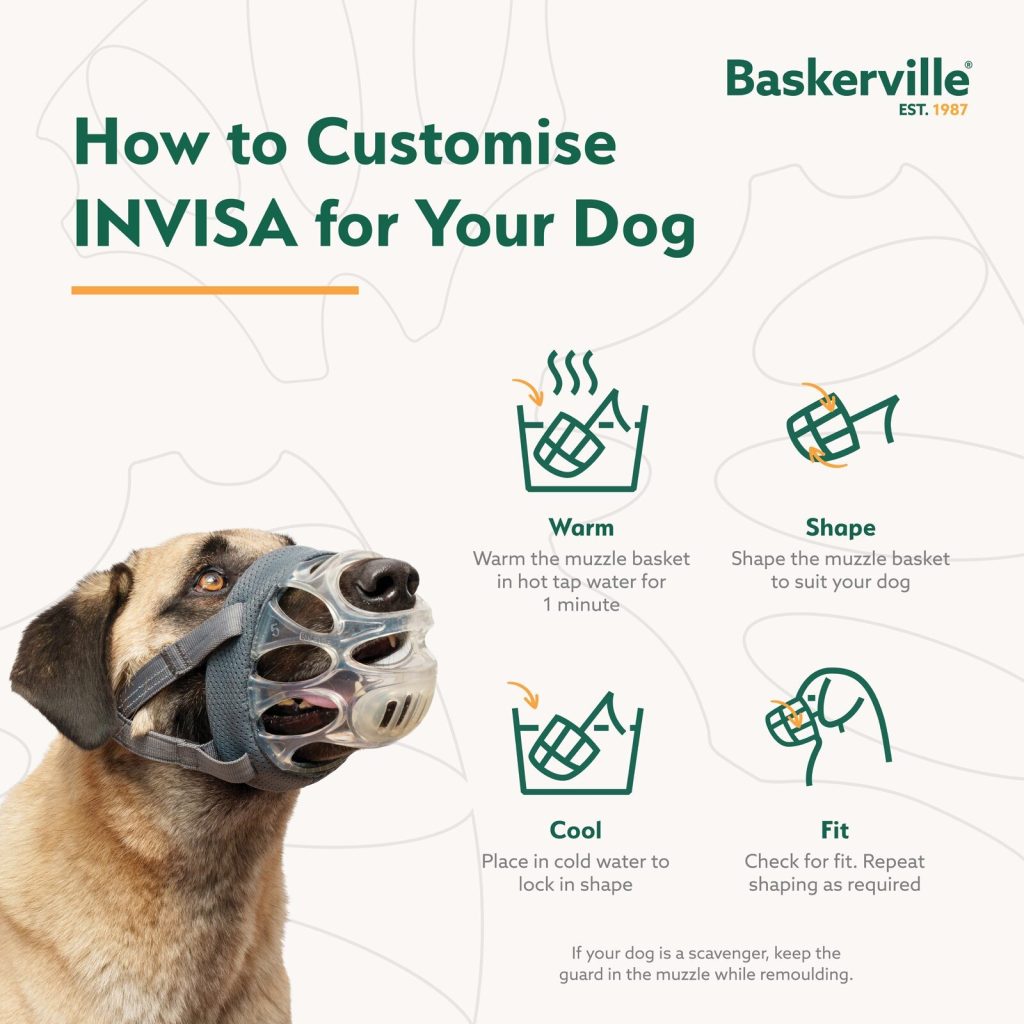
All Baskerville muzzles are made from TPR material, which can be reshaped with hot water for a custom fit. This is particularly useful if your dog’s face shape doesn’t perfectly match standard sizing.
To reshape your muzzle: Warm the muzzle basket in hot tap water for one minute. Shape the basket to suit your dog’s face. Place in cold water to lock the shape in place. Check the fit on your dog and repeat if needed. If your dog is a scavenger, keep the anti-scavenge guard in place while remoulding.
How to Train Your Dog to Accept a Muzzle
Muzzle training takes time and patience. The goal is for your dog to associate the muzzle with positive experiences, not to force acceptance. Dogs that have worn head collars in the past tend to be more tolerant of muzzles, but any dog can learn to accept one with the right approach.
Start with sight association. Hide the muzzle behind your back with treats ready. Bring the muzzle into sight and immediately give a treat. Repeat this until your dog shows interest when the muzzle appears, understanding that muzzle equals reward. Intersperse this with bringing your hand out without the muzzle – on these occasions, no treat. Your dog will quickly learn that the muzzle appearing predicts good things.
Progress to nose insertion. Smear the inside of the muzzle with something tasty – cream cheese, peanut butter, or pate work well. Hold the muzzle cupped in your hands so your dog can only access the food by putting their nose inside. Let them approach and withdraw freely; never force the muzzle onto their face. If they try to lick the food from outside, calmly move your hands to make this difficult.
Build duration gradually. Once your dog willingly inserts their nose, gently fasten the strap for brief periods while continuing to reward. Leave it on for a minute or so, then remove it before they’ve finished the food and while they’re still accepting it. Using cream cheese in a tube can be helpful here – you can insert the tube into the end of the muzzle to continue delivering food without removing it. Increase wearing time slowly, always keeping the experience positive.
Practice in different environments. A dog who accepts a muzzle at home may react differently in new settings. Train in various locations so the muzzle becomes a normal part of life regardless of where you are. If your dog tries to remove the muzzle, gently discourage them using food and praise them for tolerance. Avoid saying “no” or anything negative – they need to perceive wearing the muzzle as an entirely positive experience.
This process may take days or weeks depending on your dog’s temperament and any previous negative experiences. Rushing creates setbacks. The time invested in proper training pays off when you need the muzzle in real situations.
Frequently Asked Questions
Can dogs drink water whilst wearing a muzzle?
Yes, dogs should be able to drink, take treats, and even vomit if necessary when wearing a properly fitted basket muzzle. This is one of the key differences between basket muzzles and fabric alternatives. If your dog cannot drink while wearing their muzzle, the fit is wrong or you have the wrong type of muzzle.
Is a basket muzzle better than a fabric muzzle?
Yes. Fabric muzzles hold the mouth closed, which restricts panting and prevents dogs from regulating their body temperature. This can lead to overheating, respiratory difficulties, and skin irritation. Panting is vital for dogs – it enables them to quickly inhale cooler air, humidify and exhale it, facilitating evaporation from their nose and lungs to cool down. Basket muzzles allow natural panting, drinking, and treat-taking while still providing safety. For anything beyond momentary use, basket muzzles are the only appropriate choice – which is why the entire Baskerville range consists of basket muzzles.
Are muzzles cruel?
No. A well-fitted basket muzzle that allows panting, drinking, and treats is not uncomfortable for dogs. With proper training, most dogs accept muzzles readily. Muzzles are not cruel – when properly fitted and positively introduced, they are a safety and training aid that helps prevent bites, reduces stress for both dogs and handlers, and gives dogs a second chance by allowing safe, responsible behaviour training. The real cruelty would be avoiding situations your dog needs, like vet care, or restricting their freedom because you’re worried about their behaviour.
https://www.instagram.com/p/DLSH34eMqRY/?hl=en
Will a muzzle stop my dog from barking?
No. A correctly fitted basket muzzle allows full mouth movement, including barking. Muzzles are not designed to stop vocalisation, and any muzzle tight enough to prevent barking would be dangerously restrictive. If barking is a concern, address it through training rather than equipment.
https://www.instagram.com/p/DSGAnSNjIr1/?hl=en (see our social media posts)
Do vets recommend muzzles?
Yes. Baskerville Muzzles are vet recommended, with 94% of UK veterinary professionals and 99% of US veterinary professionals viewing muzzles favourably in their practice. Vets appreciate muzzle-trained dogs because it makes examination and treatment safer for everyone, often resulting in a better experience for the dog as well.
Can puppies wear muzzles?
Yes. In fact, it’s easier to teach a puppy to wear a muzzle than an adult dog. Introducing muzzle training early means that if you ever need your dog to wear one in future, the work is already done. This doesn’t mean putting a muzzle on your puppy for extended periods – it means teaching them to associate the muzzle with positive experiences through gradual, reward-based training.
How long can a dog safely wear a muzzle?
This depends on the dog and situation. A correctly fitted basket muzzle that allows panting, drinking, and treats can be worn for reasonable periods during walks or training sessions. However, dogs should never be left unsupervised while wearing a muzzle.
Which muzzle is best for short-nosed breeds?
The Baskerville Wide Fit Muzzle is designed specifically for dogs with broader snouts, including brachycephalic breeds like Bulldogs, Pugs, and Boxers. Its wider shape provides a more comfortable and secure fit for these face shapes.
Which is the most comfortable muzzle for long walks?
The Baskerville INVISA Muzzle, due to its 360-degree padding for improved comfort. It’s also the lightest muzzle in the range, which helps reduce fatigue during extended wear.
Moving Forward with Confidence
Understanding dog muzzles properly changes how you see them. Rather than a last resort for problem dogs, a muzzle is a practical safety tool that responsible owners use proactively. Training your dog early, choosing the right type, and ensuring proper fit means you’re prepared for whatever situations arise.
At Company of Animals, we’ve spent over 40 years developing muzzles that prioritise dog welfare alongside safety. The Baskerville range of basket muzzles reflects everything we’ve learned about what dogs need: room to pant and drink, comfortable fit, durable construction, and designs that work for different face shapes and purposes.
For dogs who need extra support with behaviour, our Pet Centre in Chertsey offers expert-led behavioural consultations. Our team works with dogs and their owners every day, combining decades of experience with genuine understanding of the challenges you face.