
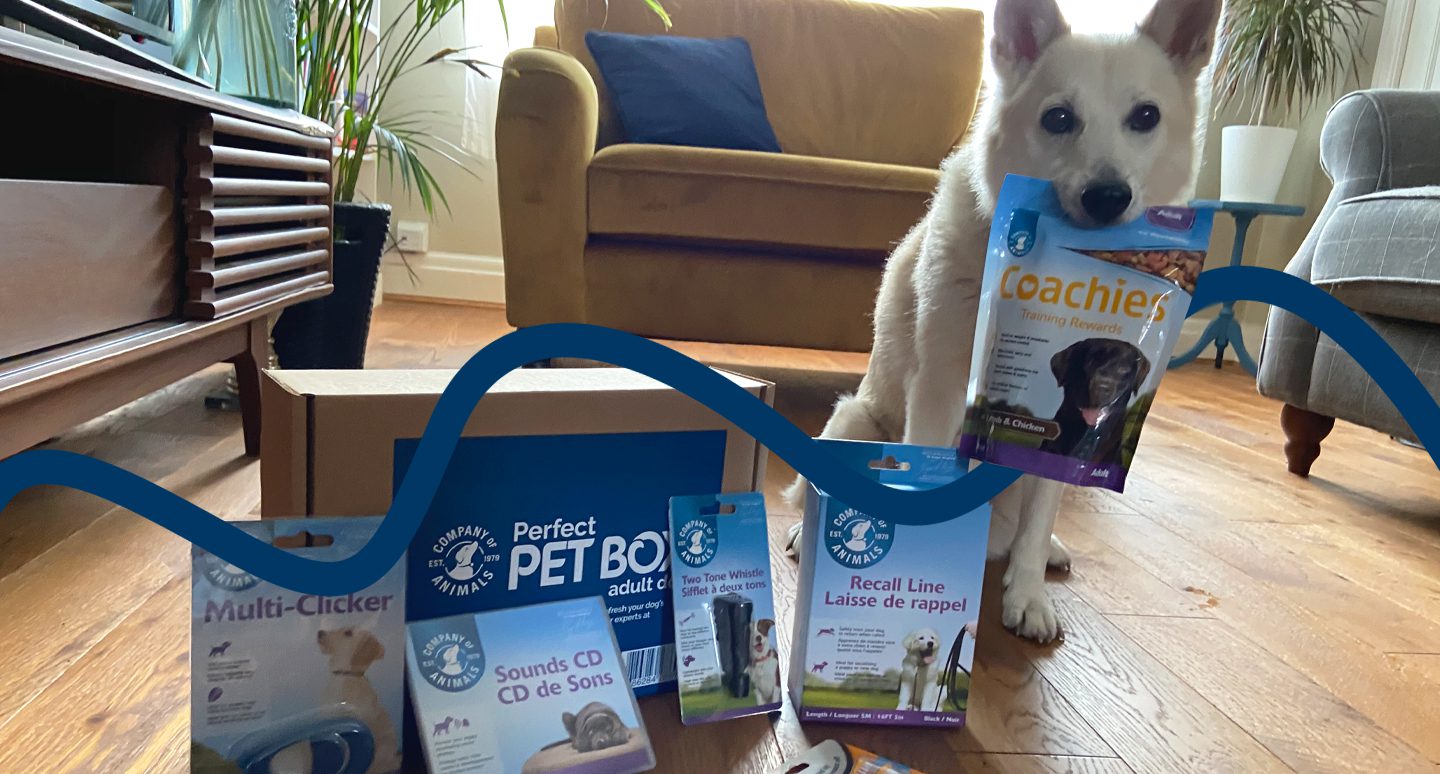
Perfect Pet Box Adult Dog
Welcome to your Perfect Pet Adult Dog training essentials guide. Below you will find lots of expert tips and advice to get you and your dog started on your positive training adventure. The topics start with teaching with addressing at home behaviours, then move on to basic obedience commands refresher and teaching consistent recall. We also explain the value of clickers and whistles as part of your training kit. Finally there is helpful information on getting started with teeth cleaning and managing noise anxieties. So let’s begin!
Addressing at home behaviours
With dogs all behaviours are learned and habits that may have started as a puppy can become enthrenched in an adult dog. If you want to tackle specific issues like jumping up, chewing, sitting on the furniture or stealing, using a clicker can help support the training process. Before you get started, see below our points to consider for dealing with unwanted dog behaviours.
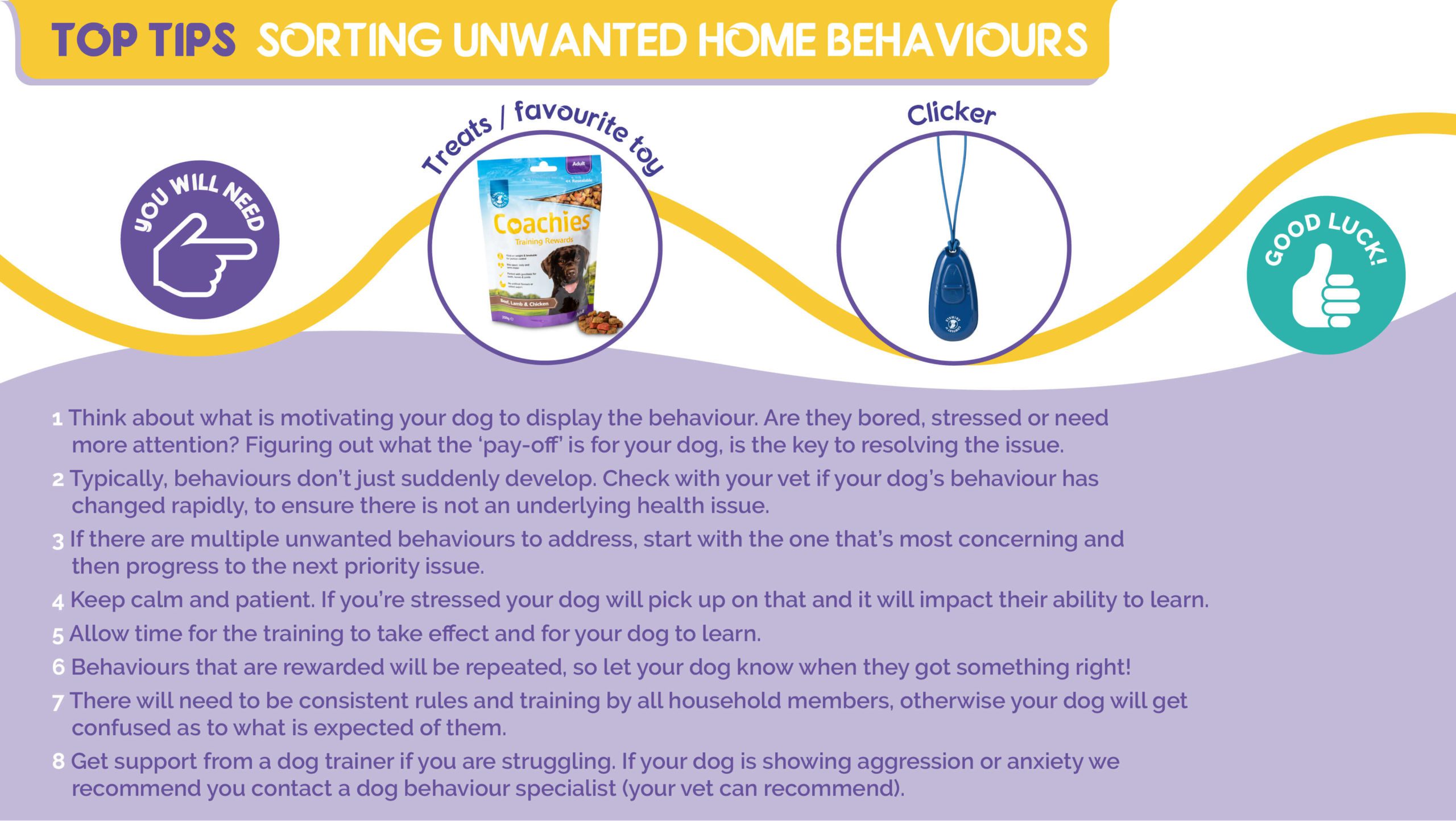
For step by step advice on how to train your dog not to jump up, chew, steal food etc, please see our helpful blogs
Learn moreImproving your dog's recall
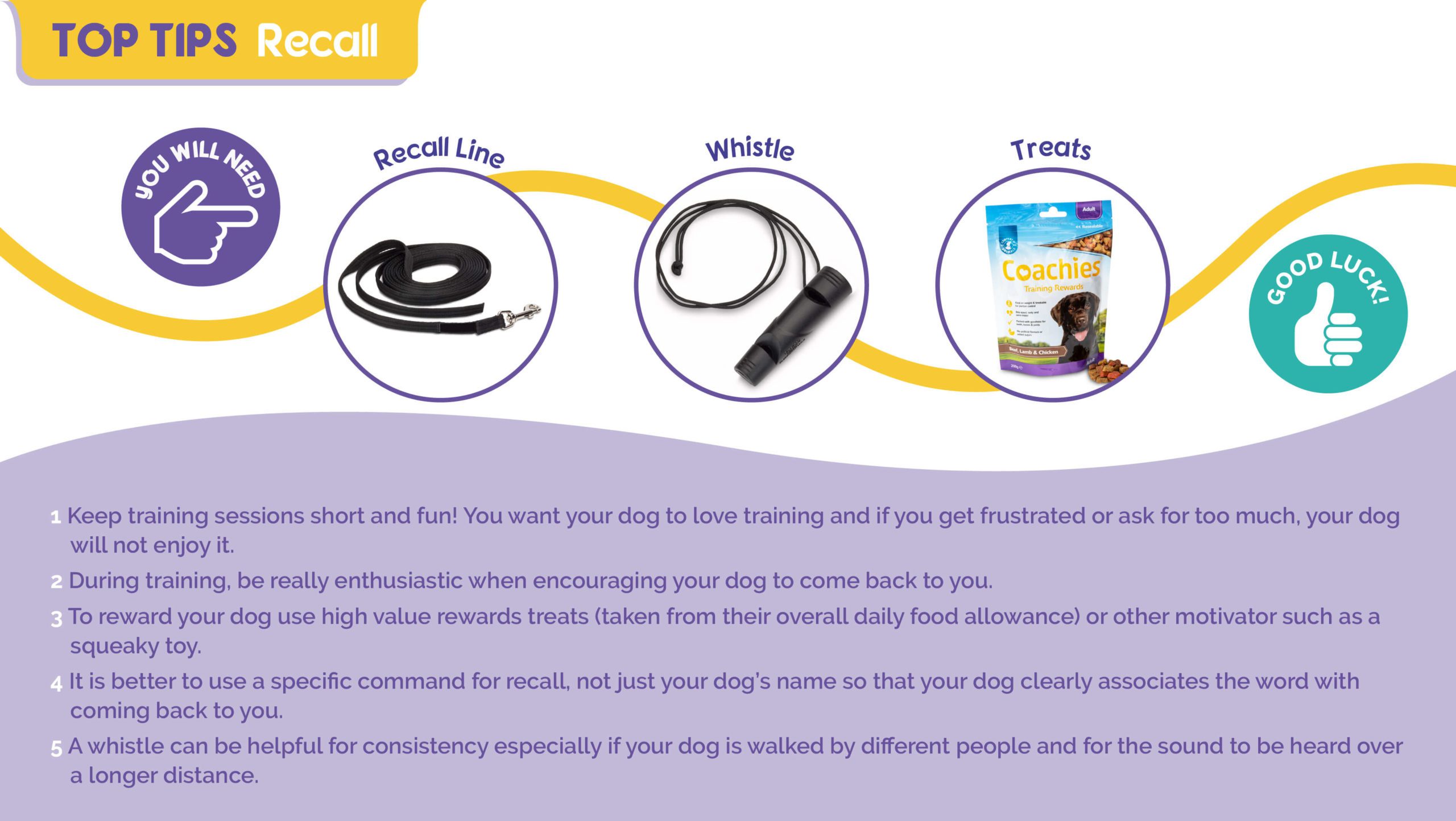
Teaching your dog good recall is important for your dog’s safety and ensure walks are enjoyable for both you and your dog. And you are not alone if this is currently an issue for you! Over 34% of UK dog owners have problems with their dog not returning to them when asked (Source: Monkeysee Shopper Research Jan 2020 500 UK dog owners).
How can a recall line can help?
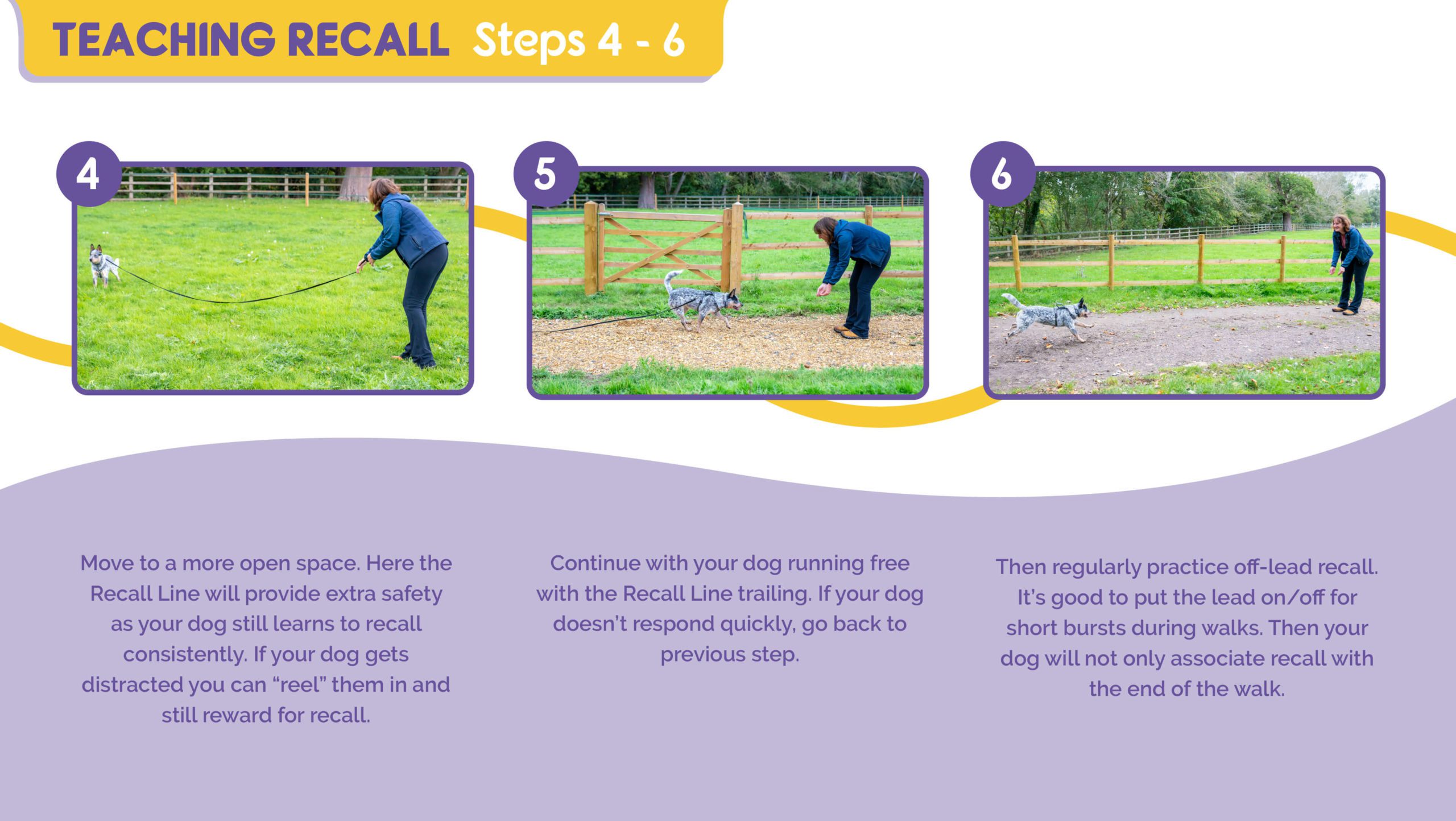
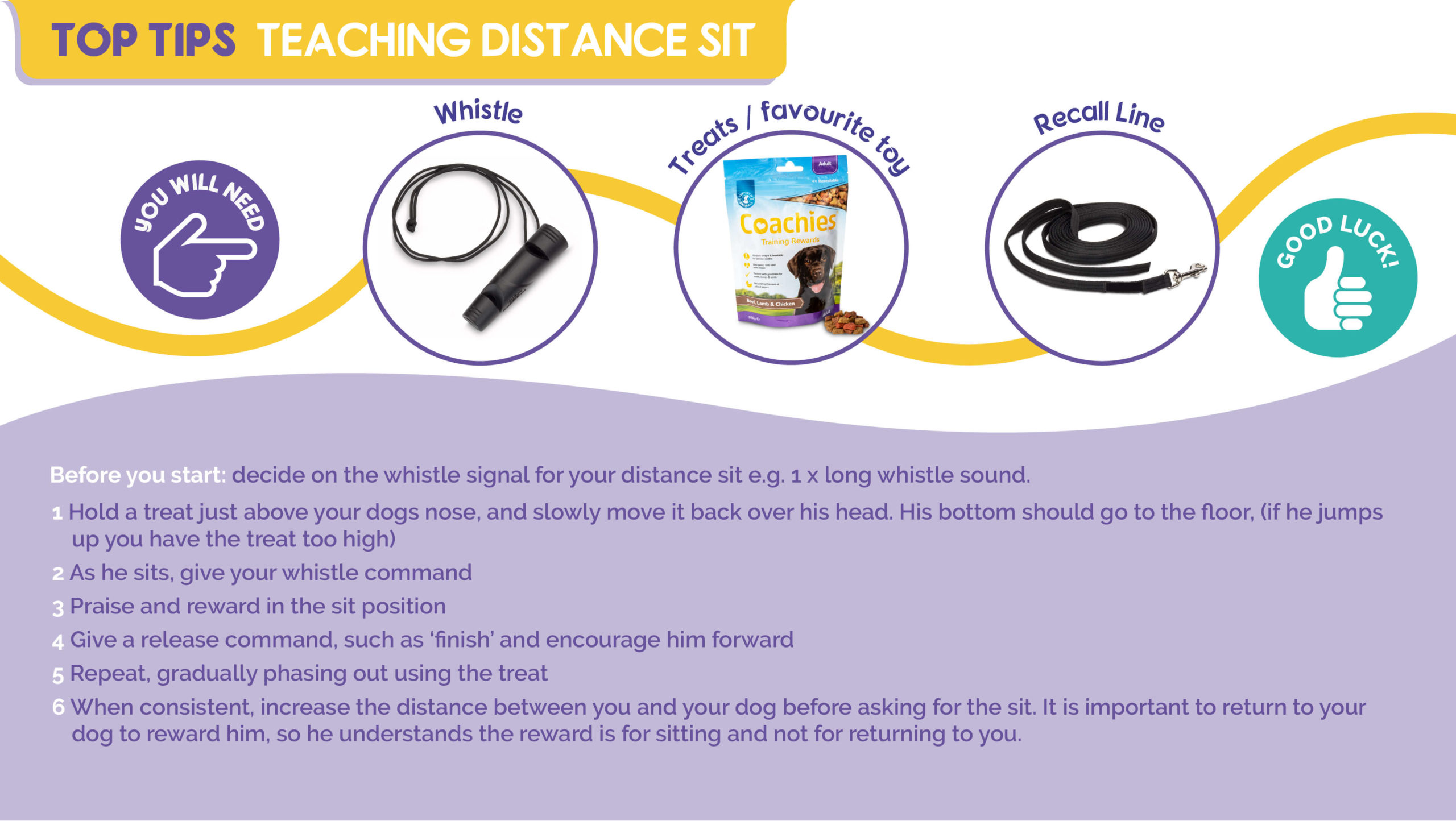
Though for early stages recall training with a puppy, you can use a normal lead to get started on the basics, once your dog is more active a longer Recall Line is ideal for recall training. This long line lead allows you to keep control of your dog while gently encouraging them back to you to reinforce the recall command.
A Recall Line is also ideal for allowing the safe and controlled socialisation of puppies, young or nervous dogs, and those with behavioural issues.
See our advice sheets below for the step by step guide on teaching your dog to recall.

Dog training with a whistle
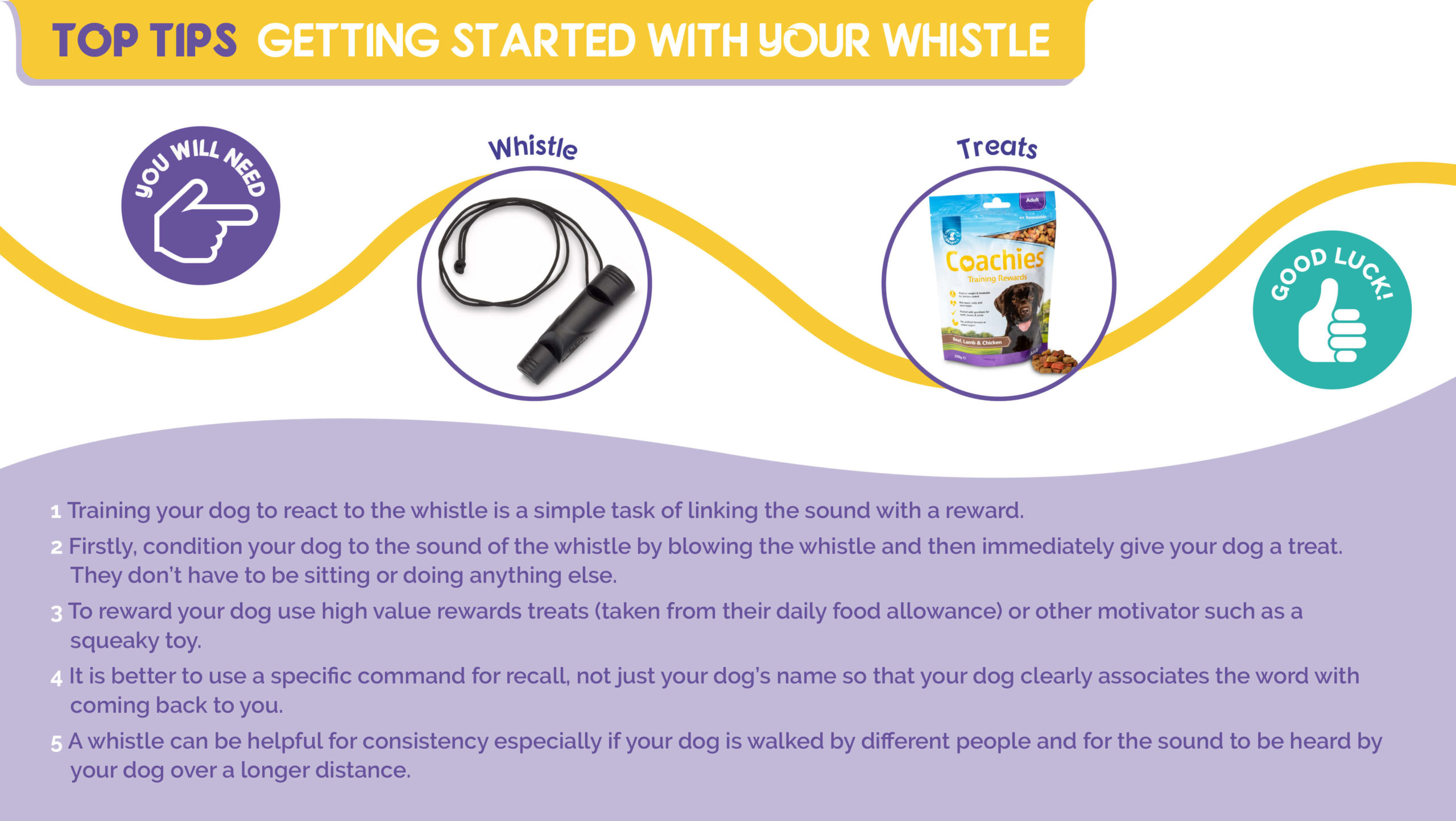
A whistle can be very helpful for teaching a dog commands e.g. recall, for a number of reasons:
- The sound can travel over a longer distance.
- It becomes a distinct sound (command) which tells the dog these instructions are for you.
- The whistle removes any emotion or stress from the command.
- Standardises the command so different people can give the command in the same way.
Basic obedience commands refresher
If your dog is a bit rusty on their basic commands then using a clicker to help your dog learn when you team up for a few refresher sessions can be really useful.
Clicker training is a quick and effective way to train dogs as the ‘click’ enables to you simply and clearly communicate to your dog the exact moment they get something right.
Once you have reviewed the advice sheets below on getting started with your clicker then see our information links on teaching handy commands for general dog safety and obedience such as ‘sit’ and ‘down’.
Teaching basic commands with a clicker
Using a clicker enables to you simply and clearly communicate to your dog the exact moment they get something right. The clicker is not a command to tell the dog what to do, nor is it the reward. The clicker indicates to your dog that they have got something right and the reward is to follow.
Starter Tips
1) Keep training sessions short and fun! You want your dog to love training and if you get angry, frustrated or ask for too much, your dog will not enjoy it.
2) Before you start training with your clicker, do a quick check to ensure your dog isn’t worried by the sound, start with the clicker on the lowest volume setting.
3) Do not point the clicker at your dog, hold it in your hand, close by your side.
4) The clicker must only be used to mark a good behaviour, not to get your dog’s attention.
5) Click only once each time.
6) The clicker is not a command to tell the dog what to do, nor is it the reward. The clicker indicates to your dog that they have got something right and the reward is to follow.
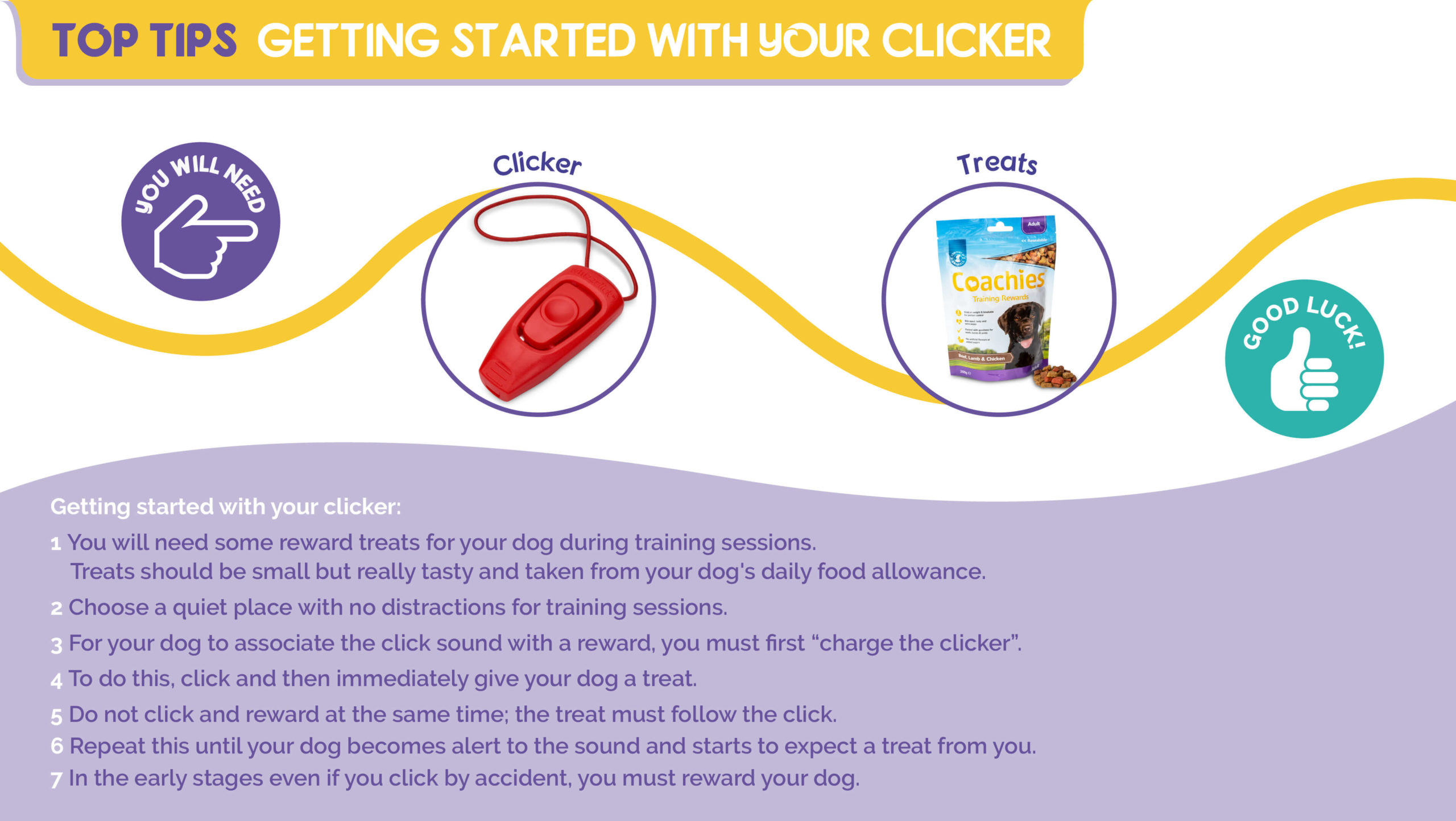

Click below for further information on teaching basic commands such as sit and down.
Find out moreTackling noise anxiety issues
If your dog had noise anxiety issues it can be very distressing for both of you. The Company of Animals Sounds CD is a proven method of noise de-sensitisation, and can be used to help treat issues with noise anxiety. There are 4 categories and over 30 sounds to choose from including loud bangs and transport through to household appliances and people.
If you want to access the sounds on your mobile please use link below to download mp3 file.
To access on your mobile click the link below to download the mp3 file version
Listen and downloadFull instructions are inside the pack, but see our starter tips below before you get going!
- For the sound therapy to work it needs to played near constantly so the sounds become white noise for your dog. Doing a few sessions a week will have little or no benefit.
- Don’t do it if your dog is already stressed about something else.
- Increasing the volume is governed by your dog’s tolerance levels, not by the period of time.
- The sounds should be associated with real positives i.e. food, games, attention etc.
- For firework phobias, start as early as possible and an absolute minimum of a month before key firework ‘seasons’ such as New Years Eve or November in the UK.
- The quality of the equipment that the cd/mp3 file is played on will massively affect the success rate.
- If your dog has a very serious issue with noise anxiety then we do recommend you seek the advice a specialist dog behaviourist to help you address the problem.
When should I start brushing my dog's teeth?
Teaching a dog to have their teeth brushed as a puppy is ideal. However dogs of any age will get used to it with practice With a rescue dog, tooth brushing can start as soon as the dog is settled in and you feel comfortable to do so. Your vet practice can also help with advice and even a quick ‘how to’ session for your dog‘s specific breed and mouth shape. Never use human toothpaste as this is toxic to dogs.
If your adult dog’s teeth look like they have a large build-up of plaque you should also seek the advice of your vet as they may need professional attention.
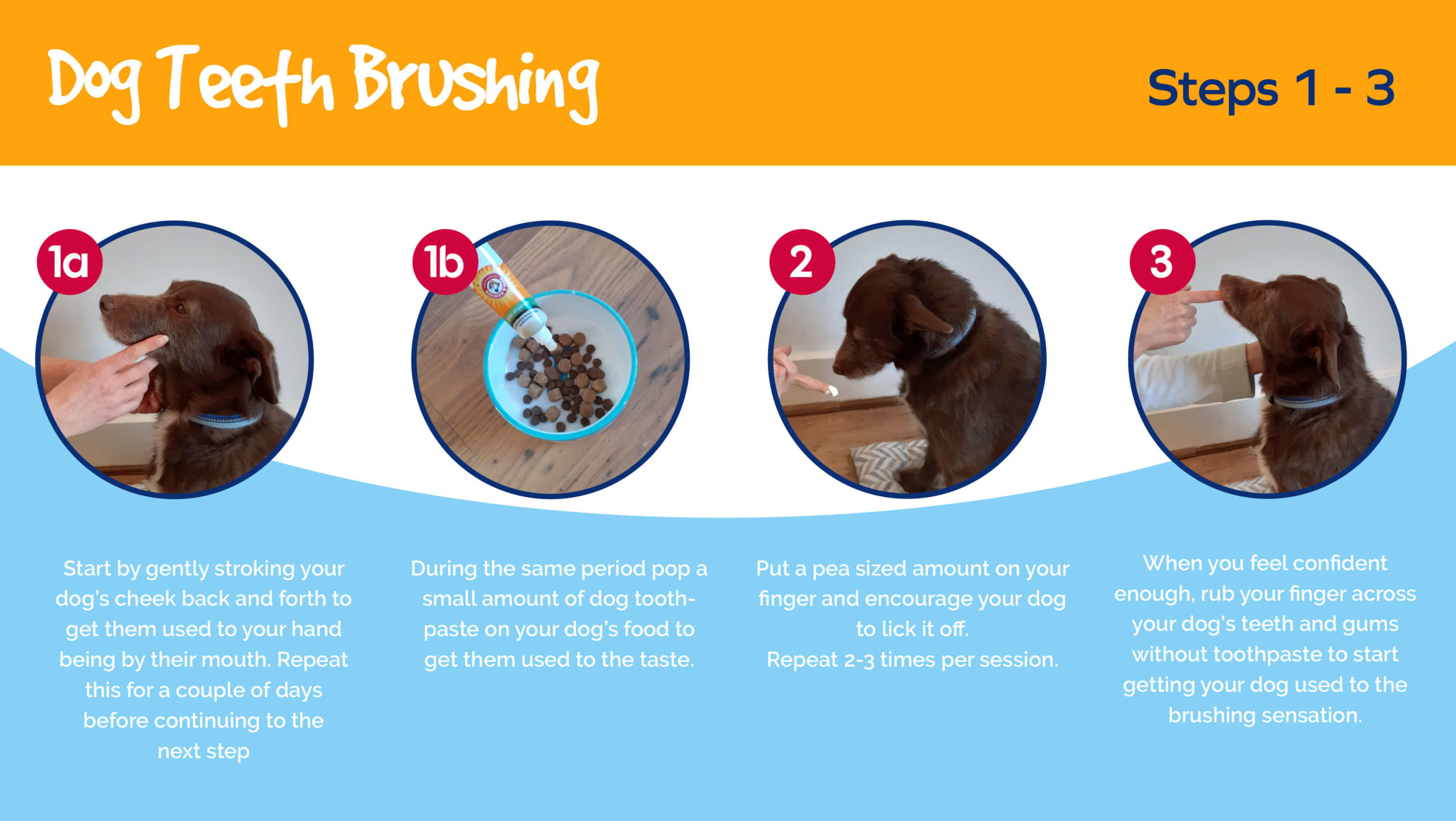
See our advice guides below for step by step introduction to dog teeth brushing. Before you get started here are some top tips below for teeth brushing success!
- Lots of praise and patience is essential for successful teeth cleaning practice!
- Don’t’ rush the early steps. If your dog looks uncomfortable at any stage, stop what you are doing and next time go back to the previous step until your dog is more relaxed again.
- Remember to reward your dog during each practice session and even when a daily routine is established.
- Once the routine is set, try to clean your dog’s teeth daily.

Why is dental health so important?
Learn more