
House training your puppy is one of the first and most essential skills you’ll teach your new companion. While accidents are inevitable during the learning phase, understanding how puppies learn and establishing a consistent routine makes the process smoother for both of you. With patience, the right approach, and proper training aids, most puppies grasp house training within a few weeks.
At Company of Animals (COA), we’ve supported thousands of puppy owners through our Pet Center, for over 40 years. Founded by Dr. Roger Mugford, world-renowned animal psychologist, and now directed by Dr. Emily Mugford, we specialize in science-backed, positive reinforcement training methods that build confidence and strengthen the bond between you and your puppy.
Enriching pets’ lives – Devoted to the physical and mental well-being of companion animals
This guide provides expert advice on house training your puppy, including step-by-step techniques, common mistakes to avoid, and how the Coachi house training Bells can make the process easier.
Why house training Is Crucial for Puppies
House training establishes the foundation for good behavior and harmonious living. Dogs are naturally clean animals and prefer not to soil their sleeping or eating areas. However, puppies don’t instinctively understand the difference between indoors and outdoors – they need to be taught.
Without proper house training, puppies may develop habits that become increasingly difficult to resolve. Inconsistent training can lead to confusion, stress, and prolonged accidents. Starting early with clear, positive methods sets your puppy up for success and prevents behavioral issues later in life.
Key benefits of early house training:
- Establishes good habits from the start
- Reduces stress for both puppy and owner
- Prevents property damage and hygiene issues
- Builds confidence and trust between you and your puppy
- Creates a structured routine that puppies thrive on
When to Start house training Your Puppy
Begin house training as soon as your puppy arrives home, typically around 8 weeks old. Puppies have small bladders and limited control at this age, so frequent toilet breaks are essential. Young puppies may need to eliminate every 1-2 hours during the day, as well as:
- First thing in the morning
- After meals
- After drinking water
- After play sessions
- After naps
- Last thing before bedtime
Puppies generally gain better bladder control by around 4-6 months, but consistent training from the outset speeds up the learning process. Remember, every puppy is different – some grasp house training quickly, while others need more time and patience.
A Step-by-Step house training Guide
Step 1: Establish a Routine
Dogs thrive on predictability. Take your puppy to the same toilet spot at regular intervals throughout the day. This helps them associate that particular area with toileting.
Create a schedule based on your puppy’s needs:
- Morning: Take them out immediately upon waking
- Post-meal: Within 15-30 minutes after eating
- After play: Following any energetic activity
- After sleep: Each time your puppy wakes from a nap
- Evening: Before settling down for the night
- Every hour: During waking hours for young puppies
Consistency is key. The more predictable your routine, the faster your puppy will learn.
Step 2: Choose Your Training Method
There are two popular approaches to puppy house training, each with distinct advantages. Choose the method that best suits your lifestyle and living situation.
Outdoor Training Method
This method involves taking your puppy directly outside to a designated toilet area. It’s the most straightforward approach and teaches your puppy from the start that outdoors is the appropriate place to eliminate.
Advantages:
- Puppy learns immediately that outside is the toilet area
- No transition phase required
- Suitable for homes with easy backyard access
- Less cleaning of indoor accidents once established
Challenges:
- Requires frequent trips outside, particularly in bad weather
- May be difficult for apartment dwellers or those without immediate outdoor access
- Night-time toilet breaks can be disruptive
Pad Training Method
This method uses puppy training pads placed in a designated indoor area. Puppies are taught to use the pads, which can later be gradually moved closer to the door and eventually outside.
Advantages:
- Useful for apartment living or homes without direct backyard access
- Provides an option during extreme weather
- Helpful for very young puppies with limited bladder control
- Can be beneficial for owners with mobility issues
Challenges:
- Requires a transition phase from indoor to outdoor toileting
- Some puppies may become confused about where it’s appropriate to toilet
- May prolong the house training process
- Ongoing cost of purchasing training pads
Our Recommendation:
For most puppy owners with backyard access, outdoor training is the most effective long-term approach. However, pad training can serve as a temporary solution during the very early weeks or in specific circumstances.
Step 3: Recognize the Signs
Learn to read your puppy’s body language. Common signs they need to toilet include:
- Sniffing the ground intensely
- Circling or pacing
- Whining or restlessness
- Heading towards the door
- Sudden distraction from play
When you spot these behaviors, immediately guide your puppy to their toilet area.
Step 4: Use a Clear Command
Choose a simple toilet command such as “be quick,” “go potty,” or “busy.” Use this phrase consistently each time your puppy toilets in the correct place. Over time, your puppy will associate the command with the action, making toilet breaks more efficient.
Step 5: Reward Immediately
Positive reinforcement is crucial. The moment your puppy finishes toileting in the correct spot, offer enthusiastic praise and a small treat.
Timing is everything – reward within 2-3 seconds of the desired behavior so your puppy makes the connection between the action and the reward.
Step 6: Supervise Constantly
During the early training phase, keep your puppy within sight at all times when indoors. If you cannot supervise directly, confine your puppy to a safe area such as a crate or puppy-proofed room. This prevents unsupervised accidents and reinforces the training routine.
The Coachi Puppy Training Line is an excellent tool for maintaining gentle control while allowing your puppy some freedom to move around safely indoors.
Step 7: Handle Accidents Calmly
Accidents will happen – they’re a normal part of the learning process. If you catch your puppy in the act, calmly interrupt them with a gentle “ah-ah” and immediately take them to the correct toilet area. If they finish toileting outside, reward them.
Never punish your puppy for accidents. Punishment creates fear and confusion, damaging the trust between you and making training harder. If you discover an accident after the fact, simply clean it thoroughly without reacting. Your puppy won’t understand why they’re being scolded.
Use an enzymatic cleaner to remove all traces of odor, as lingering scents can encourage your puppy to toilet in the same spot again.
Training Tools That Help the Process
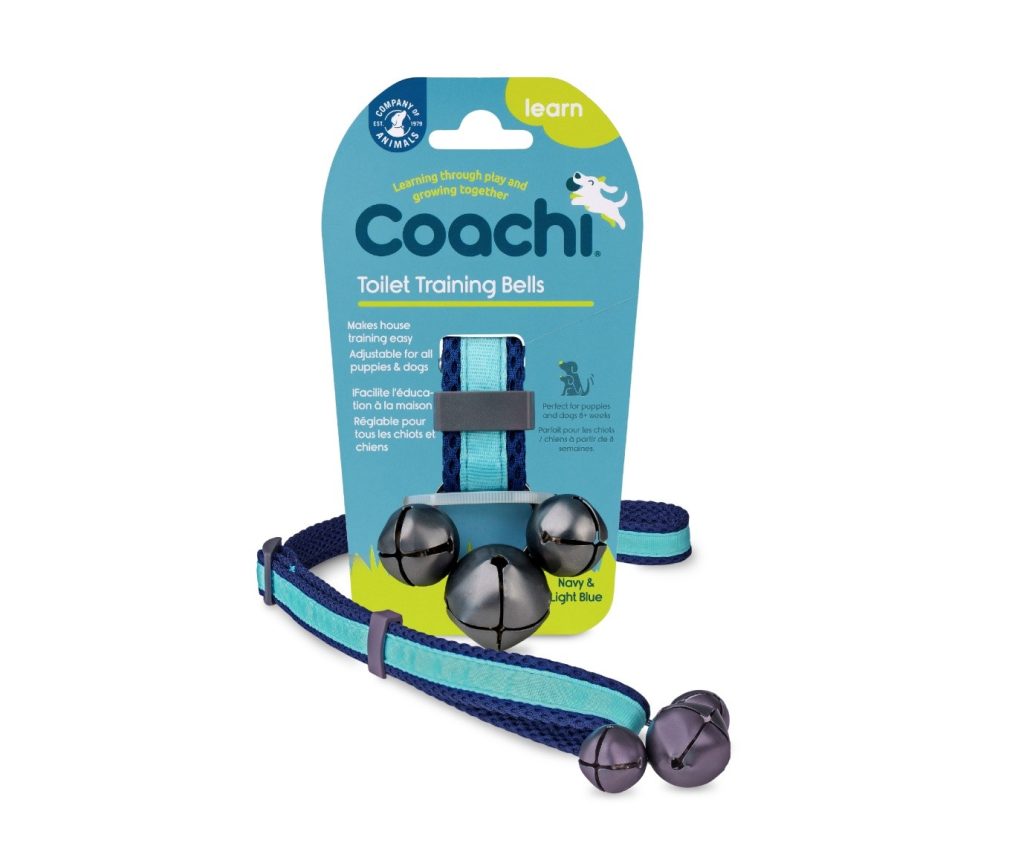
Coachi house training Bells
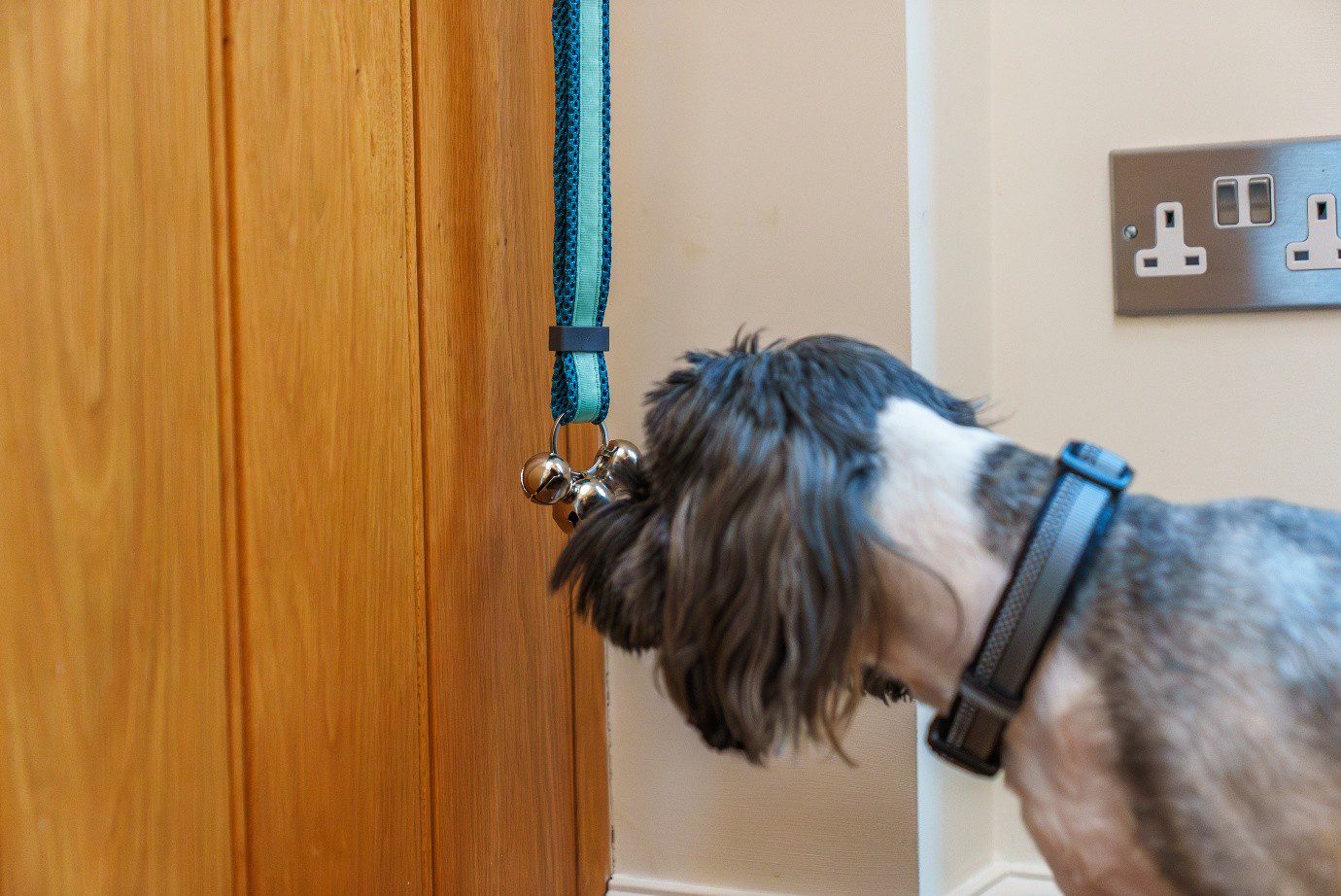
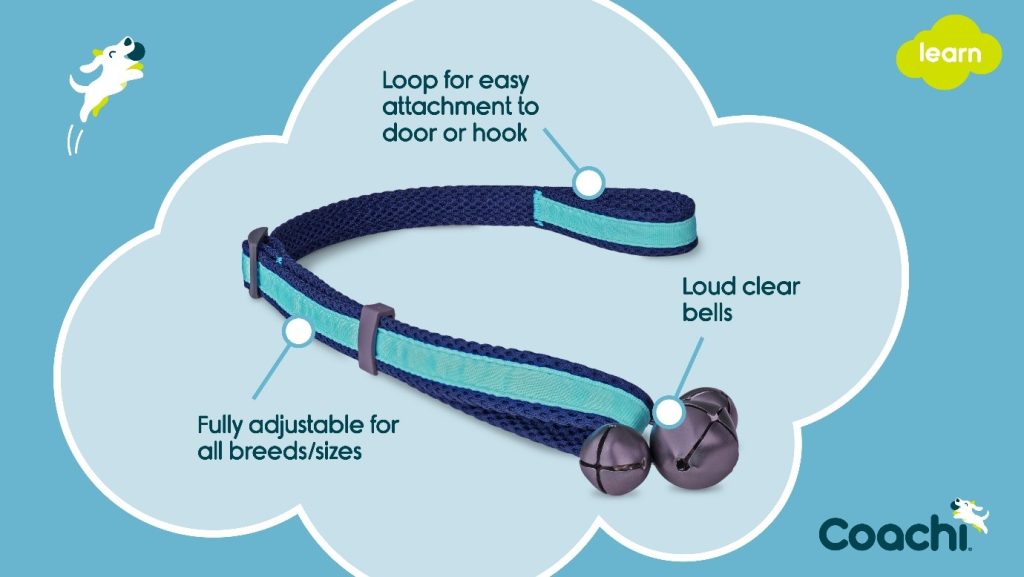
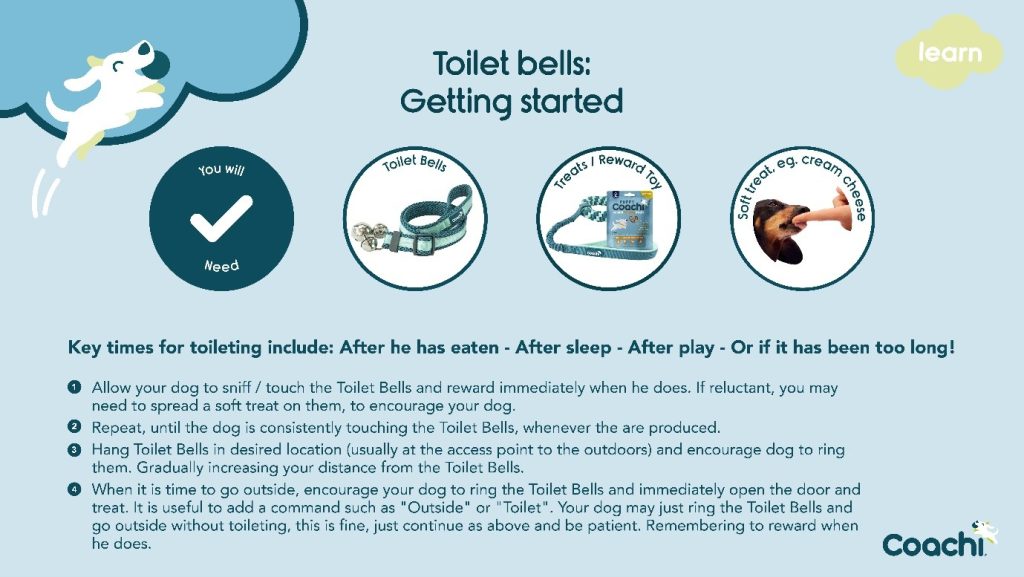
The Coachi house training Bells are a practical training aid that teaches your puppy to communicate when they need to go outside. These bells hang on your door handle at a height your puppy can easily reach with their nose or paw.
How they work:
- Each time you take your puppy outside, guide them to touch the bells with their nose or paw
- Immediately open the door and take them to their toilet area
- Reward them after they’ve successfully toileted outside
- Repeat consistently until your puppy understands the connection
Benefits:
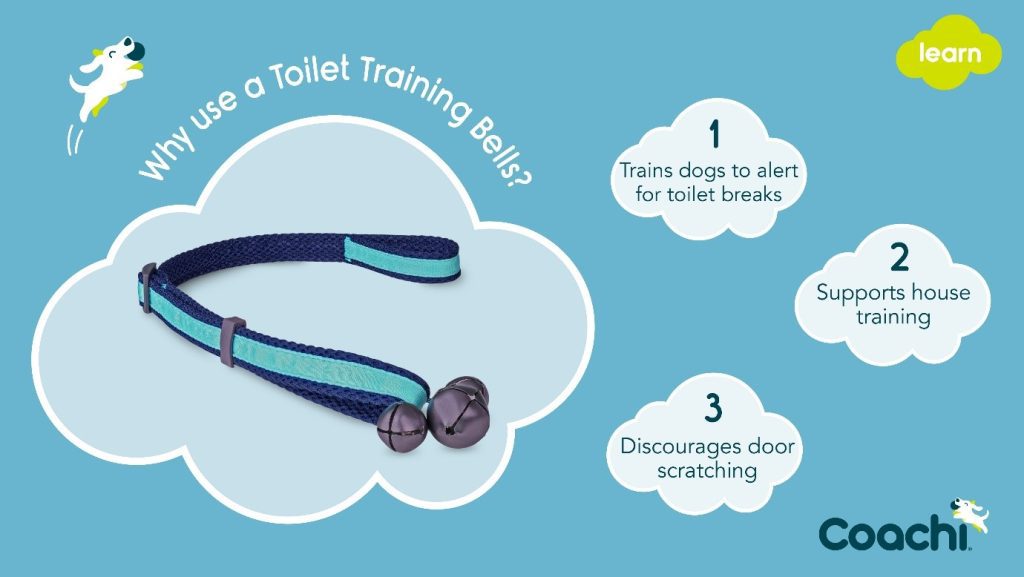
- Provides a clear method of communication
- Prevents door scratching and damage
- Adjustable height for all breeds
- Easy to clean padded material
- Three individual bells with a loud, clear ring
The bells help eliminate guesswork and ensure you respond promptly to your puppy’s needs, reducing accidents and building confidence.
Training Line for Indoor Supervision
A lightweight training line allows you to maintain gentle control while giving your puppy some freedom indoors. The Coachi Puppy Training Line helps you interrupt unwanted behaviors without confrontation, guiding your puppy to the correct toilet area when they show signs of needing to go.
Treats and Rewards
Keep high-value treats readily accessible in a Coachi Treat Pouch so you can reward good behavior immediately. Quick, consistent reinforcement accelerates learning.
Keep house training Positive
house training should never involve fear or punishment. Modern, science-backed training methods focus on rewarding desired behaviors rather than punishing mistakes. This approach:
- Builds trust and strengthens your bond
- Creates a confident, happy puppy
- Speeds up the learning process
- Prevents anxiety-related toileting issues
Patience and consistency are your most valuable tools. Some puppies learn within days, while others take several weeks. Every small success deserves celebration.
Common Mistakes to Avoid
Punishing Accidents
Scolding or physical punishment doesn’t teach your puppy where they should toilet – it only teaches them to fear you. Punishment can lead to anxiety and sneaky toileting behavior, where puppies hide to eliminate because they associate the act with negative consequences.
Inconsistent Routines
Irregular toilet breaks confuse puppies and slow progress. Stick to a predictable schedule, especially during the critical early weeks.
Ignoring Warning Signs
Missing your puppy’s signals because you’re distracted leads to preventable accidents. During the training phase, supervising your puppy must be a priority.
Using the Wrong Cleaning Products
Ammonia-based cleaners can smell similar to urine, potentially attracting puppies back to the same spot. Always use enzymatic cleaners specifically designed for pet accidents.
Expecting Too Much Too Soon
Puppies have limited bladder control. Expecting them to hold it for extended periods sets them up for failure. Be realistic about your puppy’s capabilities based on their age.
Free-Feeding
Leaving food down all day makes it difficult to predict when your puppy will need to toilet. Scheduled mealtimes create predictable toilet times.
Final Thoughts
house training your puppy requires patience, consistency, and a positive approach, but the effort is well worth it. By establishing a clear routine, recognizing your puppy’s signals, and using effective training aids like the Coachi house training Bells, you’ll help your puppy master this essential skill quickly and confidently.
Remember, every puppy learns at their own pace. Celebrate small victories, remain patient during setbacks, and maintain a positive training environment. With time and dedication, your puppy will become reliably house-trained.
At Company of Animals, we’re committed to supporting you throughout your puppy’s development. Explore our full range of Coachi training products designed to make puppy training easier, more effective, and more enjoyable for both of you.
Enriching pets’ lives – Devoted to the physical and mental well-being of companion animals.
FAQs
What is the best age to house train a puppy?
Start house training as soon as your puppy arrives home, typically around 8 weeks old. While puppies won’t have full bladder control until 4-6 months, beginning training early establishes good habits and prevents confusion later on.
How long does house training a puppy take?
Most puppies grasp the basics of house training within 4-6 weeks with consistent, positive training. However, full reliability may take up to 6 months as bladder control develops. Factors affecting training speed include breed, individual temperament, consistency of training, and the owner’s ability to maintain a regular routine.
What age is a puppy fully house trained?
Puppies typically achieve reliable house training between 4-6 months of age, though some may take longer. Smaller breeds often take slightly longer to train due to their smaller bladders. Occasional accidents may still occur during adolescence, particularly if routines change or during exciting situations.
How often do puppies need toilet breaks?
Young puppies (8-12 weeks) typically need to eliminate every 1-2 hours during the day, plus after eating, drinking, playing, and sleeping. As they mature, puppies can gradually hold their bladder for longer periods.
Should I use puppy pads or go straight to outdoor training?
For homes with easy backyard access, outdoor training is generally more straightforward and faster. Puppy pads can be useful for apartment dwellers, during extreme weather, or for very young puppies with limited bladder control. However, pad training may prolong the overall process as it requires a transition phase from indoor to outdoor toileting. Choose the method that best suits your living situation and lifestyle.